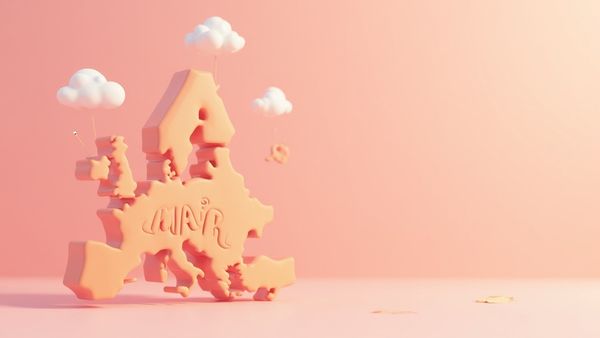
World War I, also called The Great War, was a massive global fight between two huge teams of countries from 1914 to 1918. It was caused by the M.A.I.N. factors: Militarism, Alliances, Imperialism, and Nationalism, triggered by an assassination. Learn how these tensions built up for years!
Imagine a giant, complicated chain reaction—one tiny spark that sets off the biggest, most serious conflict the world had ever seen! That’s kind of what happened when World War I, also called The Great War, kicked off.
World War I was a massive global fight that raged from 1914 to 1918 between two huge teams of countries. But why did it start? It wasn’t just one thing! It was a mix of long-simmering problems that made Europe feel like a giant, shaky tower of blocks. Historians often use a simple code word to help us remember the four main *underlying* reasons: M.A.I.N. The immediate trigger, like the final domino to fall, was the shocking assassination of an important prince in June 1914. Get ready to explore the tension that built up for years before the fighting ever began for kids like you!

Mira says:
"It’s amazing how much trouble a few secret promises and too many big armies can cause! Think of it like friends agreeing to back each other up, but when two friends argue, suddenly *everyone* has to jump in!"
What is the M.A.I.N. Acronym?
To understand why World War I started, we use a cool trick called an acronym: M.A.I.N. It stands for Militarism, Alliances, Imperialism, and Nationalism. Each letter points to a huge idea that was making European countries nervous, competitive, and ready for a fight.
These weren't things that happened overnight. They were like slow cooking ingredients in a giant pot that was about to boil over! These four big ideas created a world where countries didn't trust each other, and a small disagreement could quickly become a world war.
Mind-Blowing Fact!
World War I is sometimes called “The War to End All Wars,” but sadly, it didn't quite live up to that name! It was so huge and terrible that people hoped nothing like it would ever happen again.
How Much Power Did the Armies Have? (Militarism)
Militarism is when a country believes having a super-strong military is the best way to solve problems and prove it’s powerful. In the years before 1914, countries in Europe were in an arms race—a massive competition to see who could build the biggest, strongest, and scariest armies and navies!
Countries weren't just getting ready for a small fight; they were creating complex war plans, like Germany's famous Schlieffen Plan, which was a detailed map for a quick, two-front war. Having all these powerful weapons and detailed battle plans made leaders *more* likely to use them instead of talking things out first!
in naval spending by major powers (1890-1914)
in the size of armies between 1870 and 1914
The Secret Handshake: Understanding Alliances
Imagine you and your best friend promise to always have each other's backs, no matter what. Alliances were like these giant, secret friendship promises between countries. In Europe, these promises were written down in treaties, meaning if one country got into a fight, its allies *had* to jump in and help!
By 1914, Europe was split into two main teams: The Triple Entente (mostly France, Russia, and Great Britain) and the Triple Alliance (mostly Germany, Austria-Hungary, and Italy—though Italy would switch sides later!). These alliances were supposed to keep the peace by scaring countries away from attacking, but they ended up guaranteeing that a small fight would become a huge, global mess!
The Domino Effect: How Alliances Worked
When the Archduke was assassinated, Austria-Hungary declared war on Serbia. Because Serbia had an ally (Russia), Russia had to help them! Then, because Russia had allies (France and Great Britain), they all got pulled in! It was a total tangle of promises!
💡 Did You Know?
The desire for colonies fueled competition! Imperialism is when a powerful country tries to take over land (colonies) in other parts of the world, like Africa and Asia, to get resources and show off how rich and powerful they are. Britain and France already had massive empires, and Germany really wanted one too—which caused lots of grumpy arguments!
🎯 Quick Quiz!
Which M.A.I.N. cause describes countries competing to build the biggest and best armies and weapons?
Why Did the Spark Ignite the Powder Keg? (Nationalism)
Nationalism is a super strong feeling of pride and loyalty to your own country, culture, and people. In the early 1900s, this feeling was HUGE in Europe, but it cut both ways.
For powerful countries, it meant believing their nation was better than everyone else’s and deserved to be the most powerful. But for groups of people living *inside* big empires (like the many different ethnic groups ruled by Austria-Hungary), Nationalism meant wanting their *own* country, free from that empire’s rule!
- National Pride: Believing your country is the greatest and should always come first—even if it means arguing with neighbors.
- Desire for Freedom: Smaller groups, like the Slavic people in the Balkans, wanted to break away from the large Austro-Hungarian Empire to form their own nations.
- Russia's Role: Russia felt a special duty to protect the Slavic people, which connected them directly to Serbia!
So, you have four huge problems simmering: too many weapons (Militarism), secret promises to fight (Alliances), fighting over land abroad (Imperialism), and people demanding their own nations (Nationalism). Europe was basically a barrel full of explosive gas, just waiting for someone to drop a match!
The Match That Lit the Fuse: The Assassination
The big, sudden event that lit the fuse happened on June 28, 1914. Archduke Franz Ferdinand, who was next in line to be the emperor of Austria-Hungary, was visiting the city of Sarajevo in Bosnia.
A secret group of Serbian nationalists called the Black Hand planned to kill him. They hated that Austria-Hungary controlled their area. One young man named Gavrilo Princip got the chance and shot both the Archduke and his wife! Austria-Hungary was furious and blamed the entire country of Serbia, giving them a list of super harsh demands they couldn't possibly agree to.
(Exactly one month later)
Gavrilo Princip
Because Serbia didn't meet every single demand, Austria-Hungary declared war on July 28, 1914. Thanks to the M.A.I.N. system of alliances, Russia, Germany, France, and Great Britain all got dragged in shortly after. That single tragic moment turned a local argument into World War I, a massive conflict that reshaped the entire planet for kids and grown-ups everywhere!
Questions Kids Ask About World War 1
The Chain Reaction of History
Wow! You just learned how a few big ideas—Militarism, Alliances, Imperialism, and Nationalism—mixed with one shocking event created a World War! History is full of these moments where tension builds up, and it’s important to know the *real* reasons why major events happen. Keep digging deeper into how those old promises changed the world forever!