
The Mount Vesuvius eruption in 79 AD was a catastrophic volcanic explosion that instantly buried the Roman cities of Pompeii and Herculaneum in ash. The eruption cloud shot 33 km high! Learn how this giant time capsule preserves ancient Roman life for kids today.
Have you ever seen a volcano? They are giant mountains that can sometimes spew out hot rock, gas, and ash! But one volcano did something so huge it made history books forever.
We are traveling way back in time to 79 AD in ancient Italy, to see the terrifying, yet fascinating, eruption of Mount Vesuvius. This giant mountain sat near busy, wealthy Roman cities like Pompeii and Herculaneum. People thought it was just a regular mountain, maybe even a nice place to grow grapes! Little did they know, Vesuvius was actually an active volcano that had been quiet for hundreds of years. When it finally woke up, it changed everything in just two days, creating a giant time capsule for kids today to explore!

Mira says:
"Wow! Can you imagine a cloud of smoke shooting **21 miles (33 km) high** into the sky? That’s higher than any airplane flies! The story of Pompeii shows us how quickly nature can change things, but also how amazing archaeologists are at putting history back together for us!"
What Was Life Like in Pompeii Before the Boom?
Imagine a bustling, sunny Roman town where people loved to shop, eat, and watch exciting gladiator fights! That was Pompeii. It was a popular vacation spot for rich Romans because it was near the beautiful Bay of Naples.
Pompeii was filled with colorful wall paintings, fancy houses, bakeries with bread still in the ovens, and even public baths where people relaxed. The soil around the volcano was super fertile, meaning it was perfect for growing yummy crops like grapes and olives.
People didn't even know Vesuvius was a danger! It had been quiet for so long—about 600 years before the big event—that they likely forgot it was a volcano at all. They were too busy enjoying their Roman life!
Mind-Blowing Fact!
Warning signs were there! In 62 AD, a massive earthquake shook the entire area and damaged many buildings in Pompeii. People spent years rebuilding, but this was actually the volcano grumbling before its huge final shout!
How Big Was the Mount Vesuvius Eruption?
When Mount Vesuvius finally exploded in the autumn of 79 AD, it wasn't just a little puff of smoke. It was one of the most powerful volcanic eruptions in history!
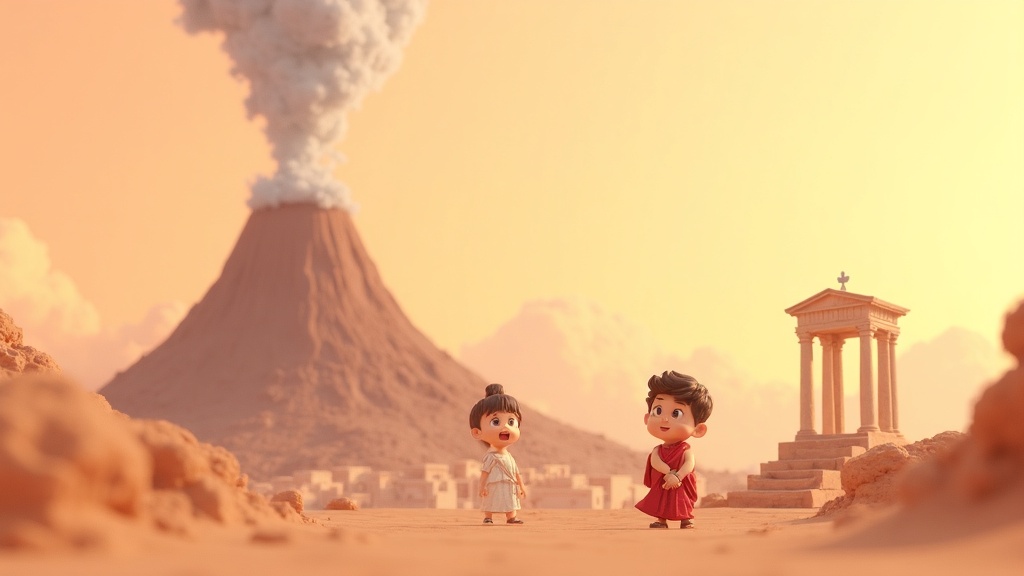
The volcano shot a gigantic cloud of super-hot ash, gas, and rock miles high into the atmosphere. Scientists compare the energy released to 100,000 times the power of the atomic bombs dropped on Hiroshima and Nagasaki. That’s a LOT of energy!
(21 miles!)
(Estimates)
How Did the Cities Get Buried?
The eruption happened in stages, like a scary, fiery play with different acts. Sadly, many people didn't leave in time because the first part was a rain of light volcanic rock called pumice, which seemed manageable.
The real danger came later with something scientists call pyroclastic flows. Imagine a super-fast, ground-hugging avalanche made of scorching hot gas and ash. These flows were hotter than a pizza oven and moved faster than a race car!
The Two Main Stages of Destruction
Phase 1: The Pumice Fall. For about 18 hours, lighter rocks and ash rained down on Pompeii. Many people tried to escape during this time, but others stayed behind, hoping the danger would pass.
Phase 2: The Pyroclastic Surges. When the towering ash cloud collapsed, it sent these deadly, super-hot flows down the mountain. These flows instantly overwhelmed Pompeii and the nearby town of Herculaneum, covering everything very quickly.
💡 Did You Know?
Because of the way the hot ash covered the bodies of the victims, archaeologists can pour plaster into the empty spaces left by the decomposed bodies to create amazing plaster casts! These haunting figures show exactly how the people of Pompeii looked in their final moments.
🎯 Quick Quiz!
What type of eruption cloud, named after an eyewitness, looks like a giant umbrella pine tree?
Why Is This Disaster Important for History?
Even though the eruption was a terrible tragedy that killed thousands, it was an incredible gift to history! The thick layers of ash and pumice acted like a giant freezer, perfectly preserving the entire city of Pompeii.
When archaeologists started digging centuries later, they found Roman houses, shops, theaters, and even graffiti exactly as they were left. It’s like finding a frozen moment in time, giving us an amazing look at life for kids and grown-ups 2,000 years ago!
- Pliny the Younger wrote the only written record we have, describing the scary events he saw from far away across the bay.
- His uncle, Pliny the Elder, tragically died trying to sail closer to the danger to rescue friends, showing great bravery.
- Pompeii is now a UNESCO World Heritage Site, which means the world agrees it is a super important place to protect and study!
Mount Vesuvius is still an active volcano today and is carefully watched by scientists. It last erupted in 1944, but it is expected to erupt again someday. For now, it rests quietly above the bustling modern city of Naples, a constant reminder of the powerful history buried beneath its slopes!
Questions Kids Ask About Ancient History
Digging Up the Past!
How cool is it that a disaster from almost 2,000 years ago can teach us so much about everyday life? The story of Mount Vesuvius and Pompeii is a powerful reminder that history is all around us, sometimes buried just waiting to be discovered! Keep listening to History's Not Boring to uncover more amazing tales!