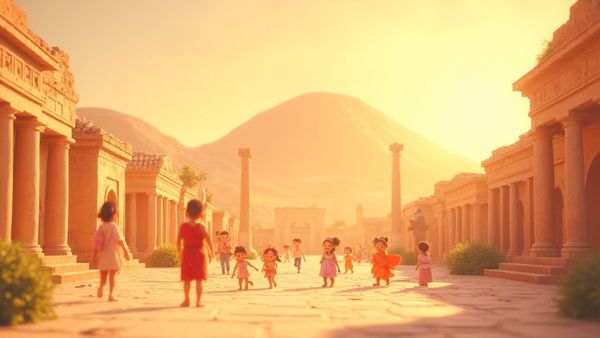
Pompeii was a vibrant Roman city near the coast that was suddenly buried by the eruption of Mount Vesuvius in AD 79. It was home to 10,000 to 20,000 people! Explore the amazing ruins where life, from toys to markets, was perfectly preserved for centuries.
Imagine a bustling, colorful city that suddenly—*poof*—disappears! Then, hundreds of years later, explorers dig it up and find everything exactly as it was: toys, food, even people frozen in place! That’s the incredible, and yes, kind of sad, story of Pompeii!
Pompeii was a busy and beautiful Roman city in Italy, near the coast. It was a fantastic place to live, with fancy houses, busy markets, and even places to watch gladiator games! At its peak, the city was home to about 10,000 to 20,000 people and was a favorite vacation spot for wealthy Romans. But all this amazing life was happening right under the nose of a giant, sleeping mountain: Mount Vesuvius!

Mira says:
"Wow, it’s like a giant time machine! The ash didn't just cover Pompeii; it acted like a giant protective blanket, stopping the city from rotting away. That’s why we can see so much about Roman life today—it was basically paused in time!"
What Was Life Like in Pompeii Before the Disaster?
Life in Pompeii was full of energy! People woke up with the sun because there was no electricity. They got water from public fountains that ran all day long, connected by huge aqueducts built by the Romans.
The streets were busy! People ran errands, gossiped at the barber's shop, and shopped at the crowded markets in the Forum, which was like the city's main town square. Richer families had amazing homes with beautiful floor pictures called mosaics and private gardens.
Mind-Blowing Fact!
Did you know that in Pompeii, you could see graffiti—writing scribbled on walls—just like today? Archaeologists have found lots of messages written in the common Latin language that people actually spoke, not just the fancy writing you see in history books!
The Scary Signs Before the Big Eruption
Even though Vesuvius seemed quiet, the ground beneath Pompeii was rumbling for years! Back in 62 AD, a very strong earthquake shook the city and caused a lot of damage.
The Romans were used to small shakes, but this one was huge. It was so bad that people spent years rebuilding their homes and temples. Little did they know, this was just the mountain stretching its muscles before the main show began!
Mount Vesuvius erupted.
Rain of pumice stones.
Estimated people who died in Pompeii.
Before being rediscovered.
How Did the Volcano Bury the City?
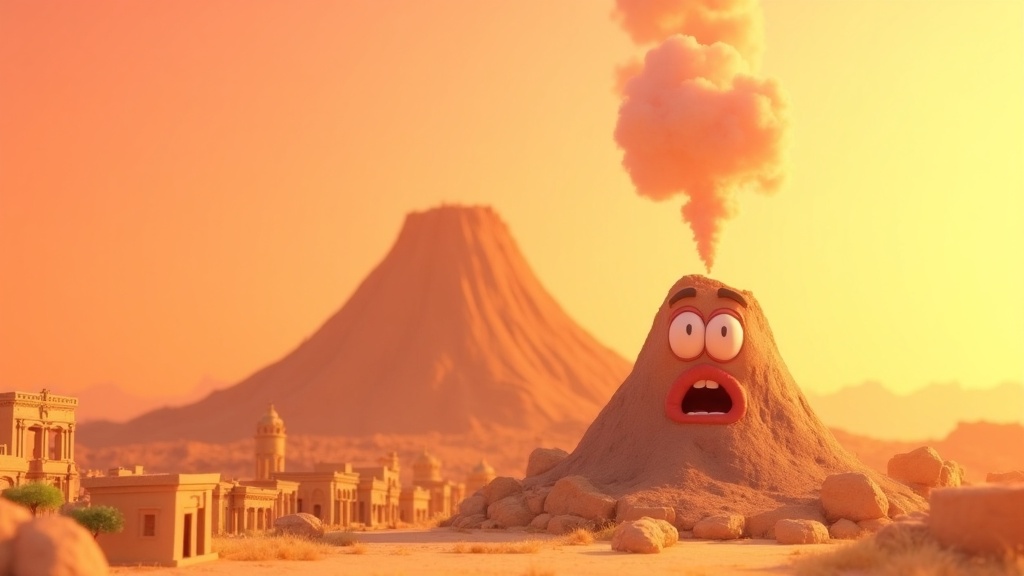
The eruption started one morning with a massive explosion! It launched ash high into the sky, so tall it looked like a giant pine tree reaching up to 15 to 30 kilometers (up to 98,000 feet)! This first part was like a heavy, dark snowstorm of tiny rocks called pumice.
The Deadly Second Wave
Many people tried to run when the pumice started falling, and some made it out! But later, the mountain unleashed the real danger: pyroclastic flows.
These flows were not slow lava; they were super-fast, rushing clouds of incredibly hot gas and ash that swept down the mountain like an avalanche. The temperatures in these flows were often between 356–428 degrees Fahrenheit! These flows covered everything, instantly preserving the city under meters of material.
💡 Did You Know?
Because the ash cooled quickly and covered everything so completely, organic things like wood in buildings, and even food, didn't rot away right away! The intense heat carbonized things like wood, turning them into a charcoal-like substance that lasted much longer.
🎯 Quick Quiz!
What was the name of the giant mountain that erupted and buried Pompeii?
Who Are the Famous 'Plaster People' of Pompeii?
When archaeologists started digging centuries later, they found strange empty spaces in the hard ash. An amazing guy named Giuseppe Fiorelli figured out what they were in 1863: voids where bodies had decayed!
Fiorelli poured liquid plaster into these body-shaped holes. When it dried, he carefully chipped away the ash to reveal hauntingly detailed casts of people and even dogs in their final moments! This unique method gives us a direct, human look at the disaster.
- The Forum: The main square for shopping, talking politics, and public events.
- The Amphitheater: Where people watched exciting (and sometimes violent!) gladiator contests.
- The Baths: Not just for getting clean, but for relaxing, exercising, and meeting friends in hot, warm, and cold pools.
- Homes: From simple shops to the huge 'House of the Faun,' you can see beautiful wall paintings (frescoes) and mosaics.
Today, Pompeii is a UNESCO World Heritage Site, visited by millions of people every year who want to walk those preserved streets. It remains one of the most important places to truly understand what daily life was like in the Roman Empire almost two thousand years ago!
Questions Kids Ask About Ancient History
Digging Deeper into the Past!
Pompeii is a powerful reminder that even the busiest cities can change in an instant. But thanks to that big eruption, we have an amazing, detailed look at the Roman world for kids today. Don't forget to check out our other episodes to discover more incredible moments from history!