Antibiotics are special medicines designed to fight off bacterial infections by killing the tiny germs or stopping them from multiplying. Sir Alexander Fleming discovered penicillin in 1928 when he saw a mold kill bacteria on a petri dish. This discovery means small cuts don't have to be deadly anymore!
Did you know that one of the most important medicines in the world was discovered because a scientist forgot to clean up his desk before vacation?
It sounds like a silly story, but it’s true! Before this amazing discovery, even a small scratch or a common cold could turn into a life-threatening problem because of tiny, invisible invaders called bacteria. People didn't have a way to fight them off inside their bodies. Infections that we easily treat today—like strep throat or an infected cut—were sometimes a death sentence! That all changed thanks to a lucky accident and a curious scientist named Alexander Fleming and his discovery of penicillin in 1928.

Mira says:
"Mira here! Imagine a world where getting a simple cut could mean being really, really sick for weeks. That’s what life was like before antibiotics! Fleming’s discovery wasn't just a good find; it was a superhero moment for medicine!"
What is an Antibiotic, Anyway?
To understand the big discovery, we first need to know what antibiotics do! The word 'antibiotic' basically means 'against life'—but only against the *bad* life, the germs!
Antibiotics are special medicines designed to fight off bacterial infections. Think of bacteria as tiny, microscopic villains trying to make you sick. Antibiotics are the police force sent in to stop them, either by killing the bacteria outright or by stopping them from multiplying so your body’s own defenses can win the fight.
Mind-Blowing Fact!
Long before modern medicine, people in ancient Egypt and China sometimes used moldy bread or soil on wounds, trying to fight off infections! They didn't know *why* it worked, but they saw it sometimes helped.
Alexander Fleming: The Man Who Found the Mold
Our story centers on Sir Alexander Fleming, a Scottish doctor and scientist who worked at St. Mary’s Hospital in London. Fleming was fascinated by germs, especially after seeing so many soldiers suffer from infected wounds during World War I.
He was trying to study *Staphylococcus* bacteria—the kind that can cause boils and sore throats. Fleming was known for being a bit messy! When he went on holiday in September 1928, he left a stack of Petri dishes (those little round dishes scientists use to grow germs) sitting out on his lab bench.
The Return Trip and the 'Weird' Dish
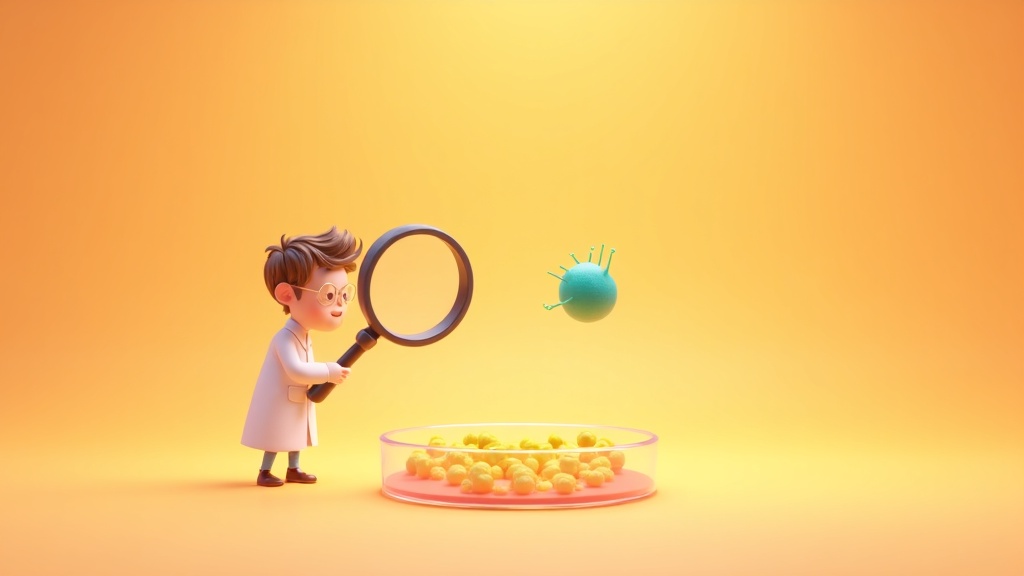
When Fleming returned to his lab, he noticed something very strange on one of the *Staphylococcus* dishes. A fuzzy, greenish-blue mold had landed on it—probably blown in through an open window!
But here’s the cool part: all around the mold, the *Staphylococcus* bacteria were dead! There was a clear circle where the bacteria couldn't grow. It was like the mold had drawn an invisible force field around itself.
💡 Did You Know?
Fleming originally called the germ-killing stuff in the mold 'mould juice' before he officially named it penicillin in 1929! He was more focused on using it to isolate other types of bacteria at first, and his colleagues weren't very excited about his discovery initially.
From Accidental Goo to Lifesaving Drug: The Next Steps
Fleming realized this mold was producing a chemical that actively fought bacteria. He called the active substance penicillin.
The problem was that Fleming could only grow tiny amounts of this 'mould juice' in his lab. It was super hard to clean and save enough of it to actually test as a medicine for people! For years, the idea sat on a shelf, waiting for help.
When Fleming noticed the mold
How much Fleming could dilute it and still kill bacteria
When Fleming shared the prize for the breakthrough
The Oxford Team Saves the Day
Nearly ten years later, in 1938, two other scientists, Howard Florey and Ernst Chain, found Fleming's forgotten paper. They decided to crack the secret of making penicillin a real medicine for kids and adults alike!
They worked incredibly hard to figure out how to grow tons of the mold and purify the penicillin so it was safe and strong enough to inject. It took a huge effort—it took 2,000 liters of moldy liquid to get enough pure penicillin to treat just one sick person!
Why Was This Discovery So Important for World War II?
The timing was perfect! Florey and his team perfected mass production just as World War II was raging. Suddenly, doctors had a way to treat infections in wounded soldiers that used to kill them.
Before penicillin, about 18% of soldiers who died in World War I died from bacterial pneumonia or infected wounds. With the new 'wonder drug,' that number dropped to less than 1% in WWII! This single discovery saved countless lives in hospitals and on the battlefield.
- The Magic: Penicillin works by stopping bacteria from building the strong cell walls they need to survive and copy themselves.
- The Heroes: Fleming (the discoverer), Florey (the developer), and Chain (the purifier) shared the Nobel Prize in 1945 for their work.
- The Legacy: Penicillin opened the door for scientists to look for *many* other life-saving antibiotics we use today!
So, the next time you see a fuzzy piece of bread or a damp spot, remember Dr. Fleming! His slightly messy lab bench led to the creation of one of the greatest inventions in all of science history for kids to learn about—the amazing antibiotic!
🎯 Quick Quiz!
What kind of microscopic invader do antibiotics like penicillin help fight?
Questions Kids Ask About Science History
Keep Exploring the Science of History!
What an incredible story of an accident turning into an amazing medical breakthrough! The discovery of antibiotics totally changed the world for the better, making everyday life much safer for everyone. Keep asking questions, keep being curious, and you might just discover the next big thing!