
The history of medicine is the story of how people have tried to understand and treat sickness and injuries over many years. Long ago, Egyptians thought illness was caused by gods or spirits. This journey shows how ancient ideas led to modern science and saved millions of lives.
Have you ever scraped your knee or had a tummy ache? Ouch! Luckily, today we have doctors, amazing tools, and medicines that help us feel better fast. But what if you were sick a *really* long time ago?
The history of medicine is the story of how people have tried to understand and treat sickness, injuries, and health over many, many years. It’s not just about hospitals; it’s about how people used their brains to figure out what kept them healthy! We’ll travel from prehistoric times, where people might have thought a headache was caused by evil spirits, to the 20th century when scientists discovered miracle drugs that saved millions of lives.

Mira says:
"It’s wild to think that people used to believe sickness was caused by angry gods! It shows how much we’ve learned by being curious and looking closely at how the world works. That’s what makes history so cool!"
What Was Medicine Like in Ancient Times?
Long, long ago, before we knew about germs, people tried all sorts of things to get well. In Ancient Egypt, for example, doctors—who were often priests—believed that illnesses were caused by gods, demons, or spirits blocking channels in the body.
To fix this, they used a mix of spiritual cures like prayers and amulets, alongside natural remedies like honey for a sore throat.
But the Egyptians were also practical! They had tools like scalpels and bone saws and could even stitch up wounds. They got a lot of knowledge about the body because they practiced mummification, which meant they learned about organs during burial rituals.
Mind-Blowing Fact!
In Ancient Greece, the famous doctor Hippocrates, often called the 'Father of Modern Medicine,' taught that diseases had physical causes, not just supernatural ones! He also gave us the Hippocratic Oath, a promise doctors still take to 'do no harm' to patients.
The Crazy Cures of the Middle Ages
If you got sick in the Middle Ages, things could get weird! Doctors believed the body was made up of four main fluids called 'humors': blood, phlegm, yellow bile, and black bile.
If you had too much of one, you were sick! A common, but messy, cure was letting blood out using leeches to 'balance' the humors. For broken bones, people in prehistoric times sometimes used splints, a good idea that still works today!
Most people didn't see a trained doctor, though. They visited the local wise woman who used herbs, or perhaps a barber to pull a tooth!
Greek doctor who thought diseases had natural causes.
Ebers Papyrus from Ancient Egypt.
The fluids medieval doctors thought controlled health.
When penicillin was accidentally found.
How Did We Learn About Germs?
The biggest game-changer in medicine happened when scientists figured out that tiny, invisible living things called germs (or bacteria) cause many illnesses! This is called Germ Theory.
This idea took over from the old 'humors' theory. In 1861, Louis Pasteur proved that germs in the air were causing things to spoil, which was a huge clue for medicine!
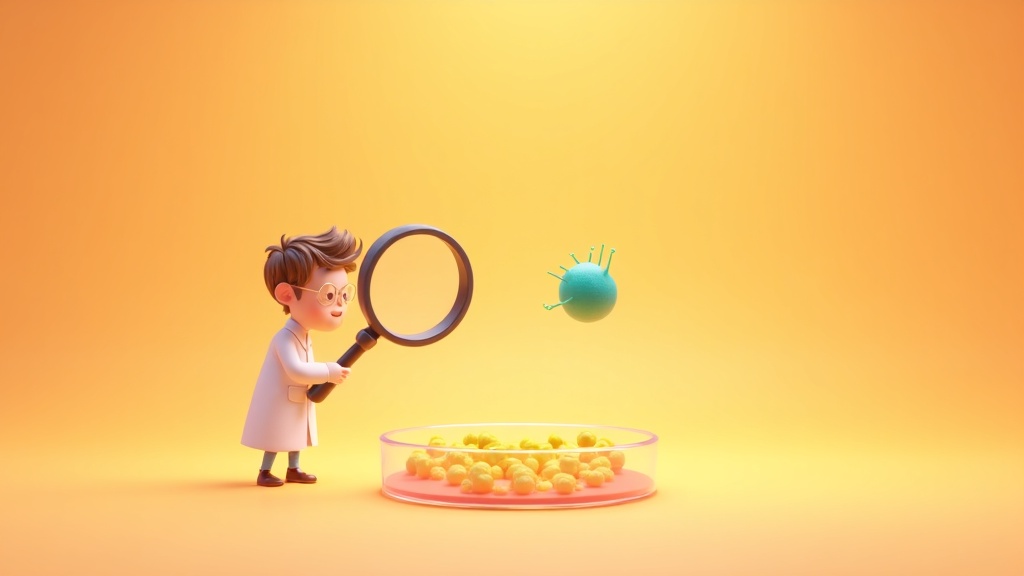
Then, in 1881, Robert Koch used a microscope to see the actual bacteria causing diseases like Anthrax. Suddenly, doctors knew *what* they were fighting!
The Amazing Antibiotic Revolution!
The next giant leap was finding something that could kill those bad bacteria *inside* our bodies without hurting us too much. Enter penicillin!
In 1928, Dr. Alexander Fleming, a bacteriologist in London, accidentally left a petri dish open while on vacation. When he came back, he noticed a mold called *Penicillium notatum* was growing on his dish, and the staph bacteria around the mold were dead!
It took a few more years for other scientists, like Howard Florey and Ernst Chain, to figure out how to purify and mass-produce this mold juice into a life-saving drug. This was the start of the antibiotic age!
💡 Did You Know?
Before penicillin, a simple cut that got infected could be deadly! Penicillin, the first true antibiotic, drastically cut down the number of people who died from bacterial infections, which is why it’s called one of the greatest advances in civilization.
🎯 Quick Quiz!
What was the name of the ancient Greek doctor considered the 'Father of Modern Medicine'?
Modern Medicine: Looking Ahead!
Today, medicine keeps getting better! Doctors use X-rays, transplant organs, and create vaccines to prevent diseases before they even start.
It’s a mix of everything—ancient wisdom, scientific experiments, and brand-new technology—all working together to keep us healthy for longer!
- Ancient Egyptian Doctors: Used tools like bone saws and scalpels; treated illness with magic and herbs.
- Hippocrates (Greek): Insisted diseases have natural causes and developed the doctor's oath to 'do no harm.'
- Medieval Healers: Believed in balancing the four 'humors' and sometimes used leeches to remove 'bad blood.'
- Louis Pasteur (1800s): Proved the Germ Theory, showing tiny organisms cause sickness.
- Alexander Fleming (1928): Accidentally discovered penicillin, opening the age of antibiotics.
The history of medicine for kids shows us that healing is a giant story of trial and error—sometimes weird error! Every time someone tried a new remedy, learned from a failure, or looked closer with a new tool, humanity took a huge step forward in staying healthy!
Questions Kids Ask About Science History
Keep Exploring the Science of Staying Well!
Wow, we traveled from ancient spells to amazing antibiotics! Next time you take a tiny pill that makes a big sickness go away, remember the thousands of years of doctors, healers, and curious scientists who made that possible. History's not boring—it’s the story of how we learned to stay strong and healthy!