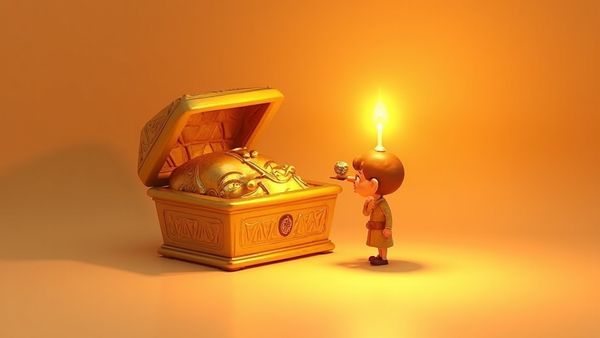
King Tut's Tomb (KV62) is the almost completely untouched burial site of the Egyptian Pharaoh Tutankhamun, discovered in the Valley of the Kings in 1922. It contained 5,398 royal treasures. This discovery is famous because it offered the first real look into a pharaoh's incredible wealth meant for the afterlife.
Imagine digging in the hot desert sand, searching for something no one has seen for over 3,000 years! What would you hope to find?
Well, that's exactly what happened in 1922! A young Egyptian pharaoh named Tutankhamun (we call him King Tut for short!) died way back around 1333 BC and was buried with unbelievable riches. Most pharaohs’ tombs were robbed long ago, but King Tut’s secret resting place was hidden under tons of dirt in the Valley of the Kings! The world thought he was a forgotten king until one dedicated archaeologist found his door.
Mira says:
"Wow! Finding King Tut's tomb was like hitting the history jackpot! It was so packed with amazing stuff, Howard Carter said it was a 'strange and wonderful medley of extraordinary and beautiful objects.' I wish I could have held the solid gold mask!"
What is the Valley of the Kings?
Picture a huge, dry, rocky valley in Egypt, near the Nile River. This was the super-secret burial ground for the pharaohs, like the ancient Egyptian kings and queens. It’s called the Valley of the Kings!
Pharaohs wanted to be buried there so robbers couldn't find their treasures and disturb their trip to the afterlife. They dug deep, fancy tombs right into the rock. King Tut's tomb, number KV62, was tucked away and forgotten, which is why it stayed safe for so long!
Mind-Blowing Fact!
King Tut was a very young ruler—he became pharaoh when he was only about 9 or 10 years old and died when he was just 18 or 19!
How Many Treasures Were Packed Inside?
When Howard Carter and his team finally opened the tomb, they couldn't believe their eyes! It wasn't just one room; it was four separate chambers completely stuffed with goodies.
These weren't just old toys; they were things the king would need in the next world: golden chariots, thrones, jewelry, statues, food, wine, and even two daggers—one made of iron that came from a meteorite!
of Objects Found!
Gold Coffin
to Clear the Tomb
How Did Howard Carter Find the Door?
Howard Carter was a super determined archaeologist who spent years looking for King Tut's tomb. He was sure it was there, even when other experts said there was nothing left to find!
The amazing find happened on November 4, 1922. Carter’s team was clearing away old huts built by later tomb workers when they found the top of a staircase cut into the bedrock. They dug down and found a sealed doorway!
The Big Moment: Peeking Inside
After clearing the stairs, they found a second sealed door. On November 26, 1922, Carter used a chisel to make a tiny hole in the door. He bravely put a candle inside to check for bad air. Then, he looked through!
When asked what he could see, Carter famously replied, 'Yes, wonderful things!' He saw piles of incredible gold objects crammed into the first room, called the Antechamber. It was the first time anyone had seen these treasures since the robbers (who came twice, long ago!) had been there.
💡 Did You Know?
The most famous thing from the tomb, King Tut’s spectacular solid gold death mask, was found covering his mummy inside the innermost coffin. It weighs about 22 pounds (10 kg)!
🎯 Quick Quiz!
Who was the wealthy friend who paid for Howard Carter’s dig?
Why Is This Discovery So Important for Kids Today?
Before King Tut’s tomb was found, we knew a little bit about pharaohs, but his tomb was nearly intact. That means we got a real, complete look at how a powerful ancient Egyptian was buried.
It showed us the amazing skill of their craftspeople—everything from the tiny amulets to the giant golden shrines was made by hand with incredible detail. It’s like opening a time capsule filled with the best art and most precious things from the ancient world for kids like you to learn about!
- The Coffins: King Tut was wrapped in three nested coffins! The outer two were gilded wood, but the innermost one was made of solid gold.
- Shabti Figurines: The tomb held over 400 little statues called *shabtis*. Egyptians believed these figurines would magically come to life to do any work for the King in the afterlife.
- The Gold Mask: The iconic mask covered Tut’s face and shoulders. It was made of gold and inlaid with lapis lazuli and other colorful stones.
The whole world got obsessed with Ancient Egypt after the discovery—it was called 'Egyptomania'! Even though the clearing of the tomb took about ten years, every single object helped historians finally piece together the story of the boy king, Tutankhamun. What an incredible adventure!
Questions Kids Ask About Ancient Egypt
Keep Digging for History!
The discovery of Tutankhamun's tomb shows us that history is full of surprises waiting to be uncovered. Never stop being curious, and remember that even the smallest piece of the past can tell the biggest story! Happy listening!