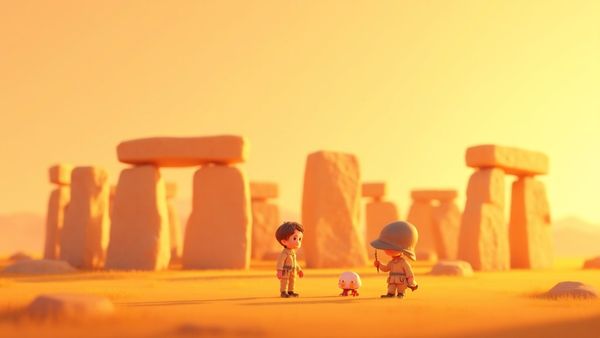
Stonehenge is an ancient monument in England made of massive stone circles, built starting around 3100 BC, making it older than the Egyptian pyramids. Its largest stones, called sarsens, weigh about 25 tons each! Learn how this incredible prehistoric puzzle was created.
What if I told you there’s a massive stone puzzle in the middle of a field in England that’s older than the Egyptian pyramids?
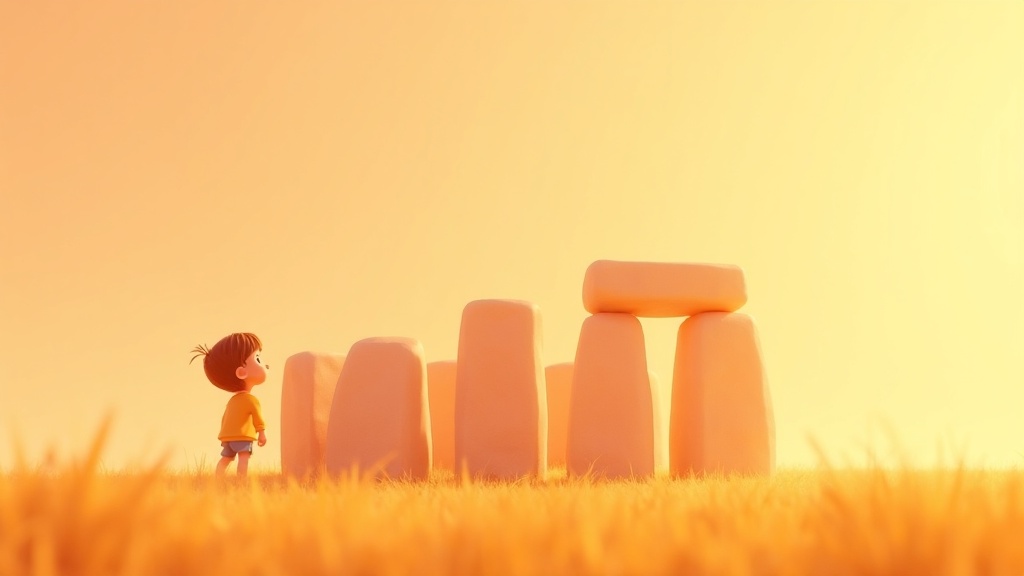
Welcome to the world of Stonehenge! This incredible, ancient circle of stones has stood in the green countryside of Wiltshire, England, for thousands of years. Archaeologists—the detectives of history—tell us that building started around 3100 BC and continued for over a thousand years! It’s one of the most famous prehistoric monuments in the world, but because the people who built it didn't leave behind any writing, we have to use clues to figure out its amazing story for kids like you!

Mira says:
"Wow! Think about it: no cranes, no trucks, just pure brainpower and teamwork! I bet they had some really clever secret ways to move those giant rocks!"
What is Stonehenge Made Of?
Stonehenge isn't just one type of rock; it’s actually made of two main kinds of super-heavy stones!
The biggest stones are called sarsens. These are a type of hard sandstone, and they are HUGE. The famous sarsen uprights (the standing ones) are about 13 feet tall and weigh around 25 tons each! That’s heavier than a large school bus!
The smaller stones are called bluestones. These are the travelers! They come from a place called the Preseli Hills in South Wales, which is a whopping 150 to 160 miles away! Even these smaller stones weigh about 4 tons each.
Mind-Blowing Fact!
Some of the bluestones have a secret! If you tap them just right, they actually make a ringing sound, almost like metal. Maybe they were the ancient world's musical instrument?
How Big is Stonehenge Really?
To get a sense of just how big this monument is, let's look at some numbers that will make your head spin!
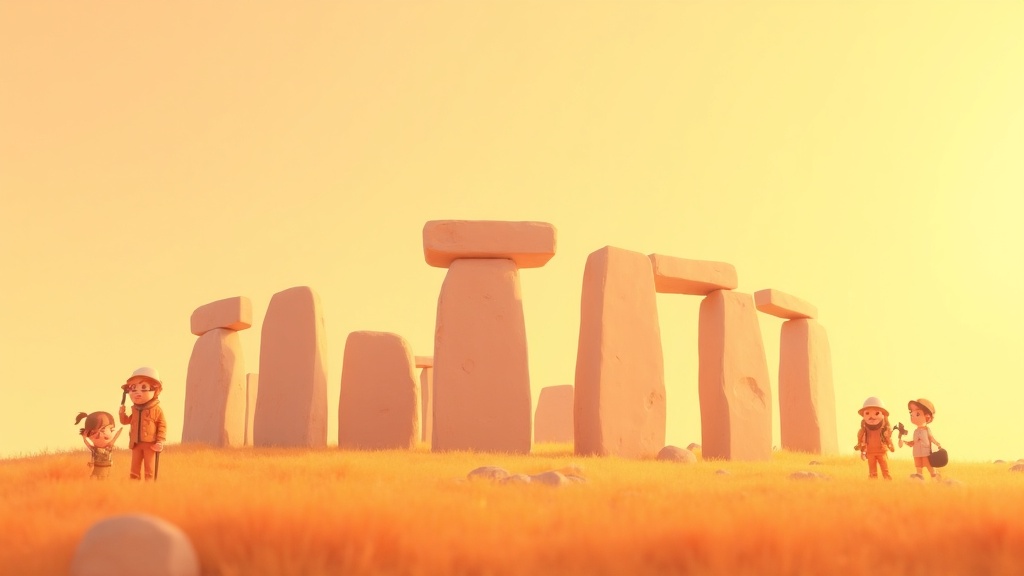
The original sarsen stone circle had about 30 massive standing stones, all topped with horizontal lintel stones to make a complete circle.
Inside that circle, there was a horseshoe shape made up of even bigger stones called trilithons—that means three stones: two uprights with one giant lintel stone across the top!
The entire stone circle itself is about 98 feet in diameter, which is almost as long as a bowling lane is wide!
of a Sarsen Stone
(approx.)
Bluestones traveled
Over many centuries
How Did They Build It Without Modern Tools?
This is the biggest mystery of all! How did people thousands of years ago move stones weighing 25 tons without wheels or giant machines? It took incredible planning that lasted for generations!
For the sarsen stones, which came from about 20 miles away on Marlborough Downs, they likely used wooden rollers (like giant logs) underneath the stones. Then, maybe hundreds of people would pull ropes, or they might have used wooden sleds, pushing the massive rocks across the land.
For the bluestones from Wales, the journey was even wilder! Since they came from so far away, they were probably loaded onto rafts or boats and floated down rivers as far as they could go. Then, people had to drag them overland to the site.
The Smart Stone Joinery
Once the stones arrived, the builders didn't just stack them! They used special joinery techniques—like how a carpenter connects wood—to make sure the stones stayed steady. They used mortise and tenon joints to lock the top lintel stones onto the upright stones. This made the circle super strong!
💡 Did You Know?
The very first structure at the Stonehenge site wasn't stones at all—it was an earthwork! About 5,000 years ago, people dug a giant circular ditch and bank, making an early henge monument that might have been used as a cremation cemetery.
🎯 Quick Quiz!
About how long ago did the very first part of the Stonehenge monument (the earthworks) start being built?
Why Did They Bother Building It?
Even experts don't know the *exact* reason, but there are some fantastic theories for why people put so much work into Stonehenge for kids to learn about:
An Amazing Calendar: The most popular idea is that it was used to track the sun! On the longest day of the year—the summer solstice (usually June 21st)—the sun rises perfectly over a large stone outside the circle, called the Heel Stone.
A Place for Funerals: Archaeologists have found many human remains buried there, so it was definitely an important cemetery for centuries.
A Healing Center: Some people think the bluestones were believed to have magical healing powers, and people might have chipped off pieces to take home as good luck charms!
- Sarsen Stones (The Big Guys): Transported about 20 miles from the north.
- Bluestones (The Little Travelers): Transported over 150 miles from Wales.
- The Heel Stone: A single, special stone aligned with the summer sunrise.
- Aubrey Holes: 56 pits inside the main circle, possibly used for burials or marking something.
No matter the true reason, Stonehenge shows us that the people of the Neolithic and Bronze Ages were incredibly clever engineers, astronomers, and planners. They worked together on a massive project that lasted longer than many countries have even existed! It's a true ancient wonder that continues to make us ask, 'How did they do that?'
Questions Kids Ask About Ancient History
Keep Exploring Ancient Wonders!
You’ve just unlocked a huge piece of ancient history! Stonehenge is proof that kids (and adults!) thousands of years ago were just as curious and clever as we are today. Keep listening and keep wondering—history is never boring!