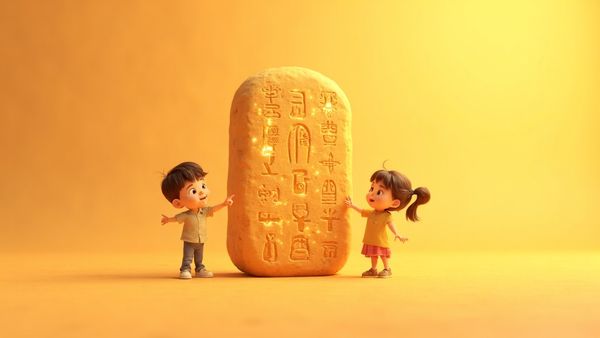
Ancient Egyptian hieroglyphics are a complex writing system using thousands of picture signs that represented sounds or whole words. The code was lost for over 1,400 years until the Rosetta Stone, found in 1799, provided the essential key, unlocking this amazing ancient history for everyone to read today!
Imagine a world where all the writing on tombs and temples was just a beautiful, but silent, picture puzzle!
That’s what Ancient Egyptian hieroglyphics were like for thousands of years! Hieroglyphs are those amazing pictures—birds, snakes, baskets, and eyes—that covered the walls of pyramids and temples. The system was used for about 3,500 years, but by around 400 AD, the secret knowledge of how to read them was totally lost. For over 1,400 years, no one on Earth could crack that code! It’s one of history’s greatest puzzles, and we’re going to find out how some super-smart people finally cracked it for all of us today!

Mira says:
"It’s like finding the instruction manual for an entire ancient civilization! If we can read hieroglyphs, we can hear the Pharaohs speak directly to us!"
What Were Hieroglyphics Anyway?
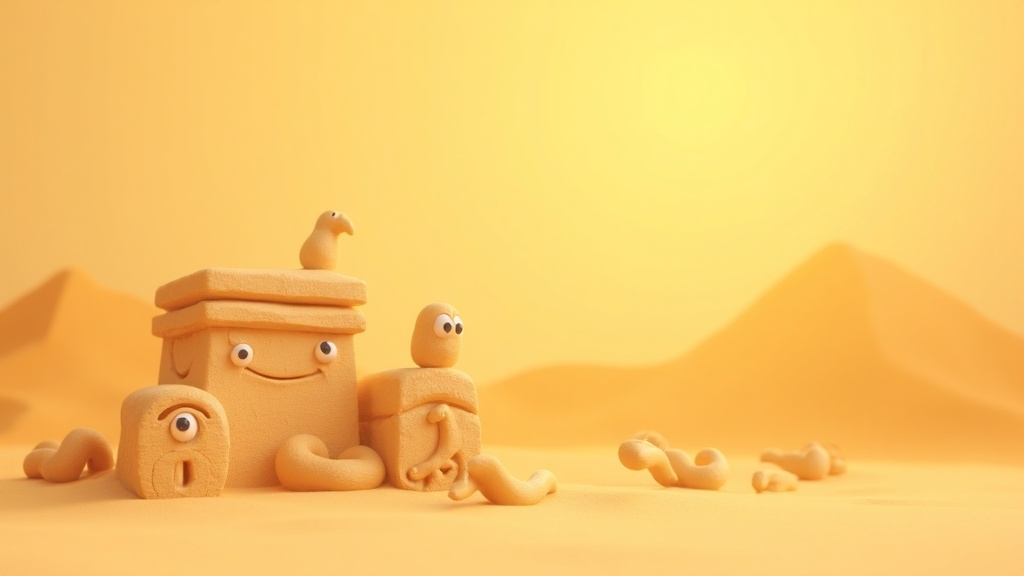
Hieroglyphics aren't just simple drawings; they are a super cool writing system! Think of it like a secret code where one picture could mean a whole word, or just one sound, like a letter in our alphabet. Ancient Egyptians had thousands of these signs! They used them for important things like carving royal stories on stone or writing sacred texts in tombs.
But wait, there’s more! The Egyptians actually had *three* main ways to write. There were the detailed hieroglyphs, a faster, flowing script called hieratic used by priests, and an even quicker one called Demotic used by everyday people for regular stuff. Even though hieroglyphs looked the fanciest, it was the loss of *all* this writing that sealed the mystery!
Mind-Blowing Fact!
The very first hieroglyphs started popping up around 3100 BC! That’s older than your great-great-great-great-great-great-great-great-great-great-great-great-grandparents (and then some!)
The Amazing Artifact That Held the Key
The story of how we learned to read them all comes down to one single, lucky discovery in 1799. French soldiers working for Napoleon Bonaparte were digging foundations near the town of Rosetta (Rashīd) in Egypt. Suddenly, *BAM!* They found a giant, broken piece of dark, hard rock called the Rosetta Stone.
This stone wasn't just cool looking; it had the *exact same message* carved on it three different ways: in Hieroglyphs, in Demotic, and in Ancient Greek! Since smart scholars *could* read Ancient Greek, they finally had a translation key—like having the answer sheet for a giant test!
How Did Scholars Finally Crack the Code?
Once the stone was brought to the British Museum, scholars all over Europe raced to figure out the secret. Two big names in this race were Thomas Young from England and Jean-François Champollion from France. They knew the Greek part said it was a decree—a message from priests honoring King Ptolemy V around 196 BC.
The trick was figuring out that hieroglyphs weren't *just* pictures representing ideas. Young made the first big step by noticing that the royal names, like Ptolemy, were written inside an oval shape called a cartouche. Champollion took this idea and ran with it!
Champollion's 'Eureka!' Moment
Champollion, who was a language whiz and knew Coptic (a later Egyptian language), realized something HUGE: many hieroglyphs stood for *sounds*, not just things! He compared the name Ptolemy in the Greek text with the signs in the cartouche on the stone. By matching the sounds, he started building an alphabet for the hieroglyphs.
His final, amazing breakthrough happened in 1822. He tested his sound-signs on other royal names he found, like Cleopatra, and it worked! He realized hieroglyphs were a mixture of sound signs (phonetic), idea signs (ideographic), and signs that told you what *type* of word it was (determinatives). That discovery opened up all of ancient Egyptian history for kids like you to learn about today!
💡 Did You Know?
The text on the Rosetta Stone itself is basically a big 'thank you note' from the priests to King Ptolemy V for giving them tax breaks for their temples!
🎯 Quick Quiz!
What special shape on the Rosetta Stone helped clue scholars into where a royal name was written?
Why Does This Code-Cracking Matter for Kids Today?
Without the Rosetta Stone and the hard work of people like Champollion, we would know almost nothing about the lives of the Pharaohs, their gods, or how they built those incredible monuments. We wouldn't know their actual history, just what other people *thought* about them!
Thanks to that broken stone, we can now read monuments that are thousands of years old and learn directly from the people who lived there. It proves that when we keep exploring and don't give up on a tough puzzle, we can unlock the secrets of the past!
- Hieroglyphs could be: 1. A picture of an object (Ideogram). 2. A picture representing a sound (Phonogram). 3. A sign clarifying the word's meaning (Determinative).
- The Rosetta Stone is made of a hard rock called granodiorite.
- The knowledge of hieroglyphs was lost after the 4th Century AD when Christianity became widespread in Egypt.
- The Ancient Greek on the stone helped confirm the sounds Champollion found in the hieroglyphs!
So, the next time you see a picture of an Egyptian wall, remember: it’s not just art! It’s a complex, ancient message that a team of super-sleuths finally translated using one very famous, three-part stone slab. That’s how history’s not boring—because the secrets are always waiting to be found!
Questions Kids Ask About Ancient Egypt
Keep Exploring the Nile!
You just learned how one of history's biggest mysteries was solved! From silent pictures to clear stories, cracking the code of hieroglyphics changed everything we know about the Pharaohs. Keep asking questions, because history is full of hidden codes waiting for the next great explorer—maybe that’s you!