Homo sapiens is the scientific name for modern humans, meaning 'wise man.' This species evolved in Africa about 300,000 years ago and is unique because of its very large brain size, allowing for complex thinking and tool creation. Learn how they became the only humans left on Earth!
Have you ever wondered: Who were the very first people like us?
Get ready to travel back in time, way, way before castles and cars! We are talking about Homo sapiens—that’s the fancy scientific name for modern humans, just like you and me! The word *sapiens* means “wise” or “intelligent.” Scientists believe our species, Homo sapiens, first appeared in Africa about 300,000 years ago during a time of big climate changes. We are the only type of human left today, but millions of years ago, Earth was home to lots of different human species! This is the story of how *we* became the ones to explore the whole planet.

Mira says:
"It’s mind-blowing to think that our ancestors were figuring out how to survive using just what they found in nature! That first spark of wisdom is what makes our story so cool!"
What Makes Us Homo Sapiens?
If you looked at an early Homo sapiens, they would look a lot like us, but with a few differences. One big change was in our skeletons: we have a lighter build compared to earlier humans. Our skulls are also rounder and our foreheads are high and flat—super different from the heavy, sloping brows of some of our cousins, like the Neanderthals!
The biggest difference, though, is inside our heads! We developed very large brains, allowing for incredible thinking, creating complex tools, and sharing amazing ideas. This is where that name 'wise man' really shines through. We learned how to communicate better, which helped us work together and survive tough times.
Mind-Blowing Fact!
The name *Homo sapiens* was first given to our species by a scientist named Carl Linnaeus way back in 1758! That’s before your great-great-great-great-grandparents were even born!
Amazing Brainpower: What Did Early Humans Do?
For most of our history, Homo sapiens were hunter-gatherers. That means they spent their days looking for food, not growing it! They hunted animals with special weapons and gathered fruits, nuts, and roots.
But they were smart hunter-gatherers! They didn't just use rocks; they started making specialized tools—tools to make *other* tools. They even learned to catch fish and collect shellfish along the coast as early as 164,000 years ago!
In Africa
For modern humans
The big journey starts
How Did Homo Sapiens Take Over the World?
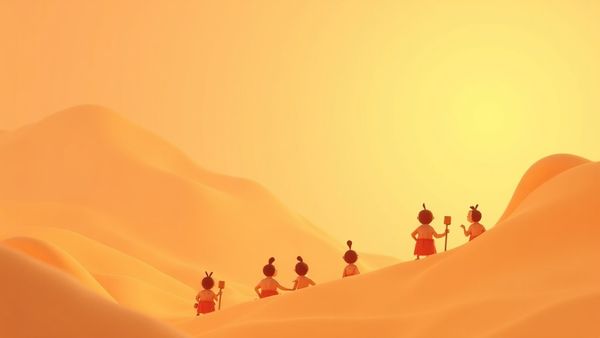
The biggest adventure in early human history is called the “Out of Africa” migration. It’s the story of how we spread from our birthplace to cover the entire globe! There were a few waves, but the most successful one, which led to everyone alive today, started around 60,000 to 70,000 years ago.
Following the Coastline
One main path followed the coastlines. Imagine a small group crossing the Red Sea! They traveled along the coasts of Arabia and Persia, eventually reaching India.
This group was super adaptable! They managed to hop across islands—even reaching Australia around 50,000 years ago!
Meeting Other Humans
As Homo sapiens moved into Europe and Asia, they met other human species who had left Africa much earlier, like the famous Neanderthals! For a while, both groups lived in the same places.
We know that sometimes they even interbred, which means some of us walking around today carry a tiny bit of Neanderthal DNA in our bodies—like a super old family memory! Eventually, around 35,000 years ago, the Neanderthals disappeared, and Homo sapiens were the last humans standing.
💡 Did You Know?
The journey to the Americas happened much later than the trips to Asia and Australia! The first Homo sapiens reached the Americas only about 15,000 years ago—that’s super recent in this huge timeline!
🎯 Quick Quiz!
What does the Latin name *Homo sapiens* mean?
Why Did Humans Leave Africa?
Scientists think our ancestors left Africa because the climate changed. When parts of Africa became drier with less rain, the forests shrank, and the open grasslands (savannahs) grew bigger.
This forced them to move to find food and better places to live. Being curious explorers also probably pushed them to see what was over the next hill, leading to new discoveries and amazing new homes across the world!
- They created art, like cave paintings and jewelry, showing they had complex thoughts and symbols.
- They were master toolmakers, making sharp points for spears and even sewing needles!
- They learned to build shelters and use fire for warmth and cooking.
- They lived in broad social networks, meaning they looked out for their whole group.
For millions of years, Homo sapiens thrived as hunter-gatherers. It wasn't until the very end of prehistory, about 12,000 years ago, that some groups started to settle down and invent farming—that’s when the real next chapter of human history began!
Questions Kids Ask About Prehistory
Keep Exploring!
The history of Homo sapiens is the story of unbelievable adaptation and curiosity! From a small group in Africa to populating the entire globe, we are an amazing species. What new discoveries will scientists make next about our early ancestors for kids to learn?