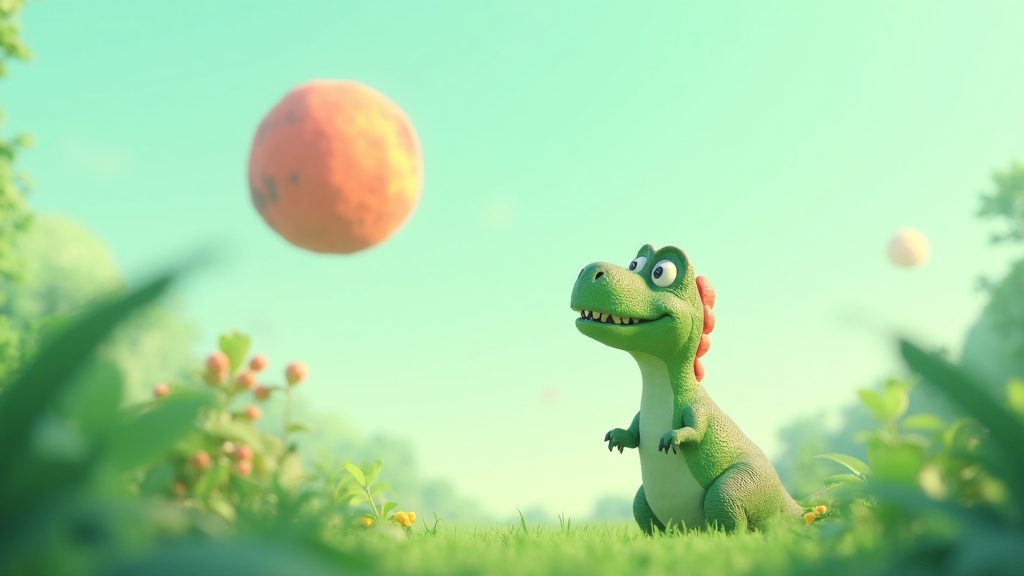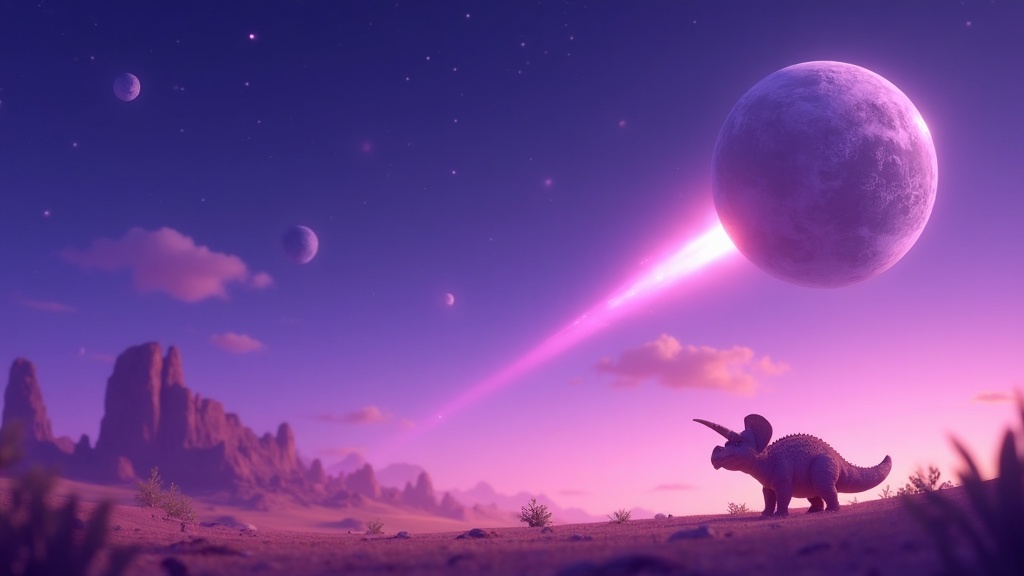
Dinosaur extinction refers to the sudden mass die-off of giant, non-bird dinosaurs 66 million years ago. The main cause was a massive 10 km wide asteroid impact that created the Chicxulub crater, wiping out 70% of life on Earth. It explains why T-Rex isn't walking around today!
Imagine you're the biggest, strongest animal on Earth—you rule the land, the sky, and the seas... until one day, a terrifying, giant space rock changes EVERYTHING in one flash! That's what happened to the dinosaurs.
The dinosaurs ruled our planet for an incredible 165 million years! That’s way longer than humans have been around. Then, about 66 million years ago, at the end of the Cretaceous period, the giant reptiles vanished in what scientists call a mass extinction. About 70% of all animal life on Earth died out! For years, people wondered *why* such amazing creatures suddenly disappeared. Were they too big? Did they catch a cold? We’ve got the top facts for kids about this huge, world-changing event!

Mira says:
"It’s like the Earth got hit by the biggest firework EVER! But this firework didn't bring light; it brought darkness and cold. The way the asteroid changed the *whole planet's weather* is what made life so tough for the giants."
What is Dinosaur Extinction? The Big Event!
When scientists talk about the dinosaur extinction, they mean the sudden way that all the giant, non-bird dinosaurs disappeared from Earth. It wasn't like one T-Rex got sick and told his friends. This was a *mass extinction*, which means lots and lots of different kinds of animals—on land and in the ocean—died out at almost the same time.
The most accepted idea, supported by tons of clues, is that a massive space rock—an asteroid—smashed into our planet. This happened near what is now the Yucatán Peninsula in Mexico, creating a gigantic hole called the Chicxulub crater.
Mind-Blowing Fact!
The force of the asteroid impact was so huge, it was like setting off 100 teratons of TNT—that’s 4.5 billion times the power of the Hiroshima atomic bomb!
How Big Was the Space Rock?
Think about the biggest thing you can imagine, maybe a mountain or a huge skyscraper. Well, the asteroid was even bigger! Scientists estimate it was about 10 kilometers (about 6 miles) wide! That’s like a rock as tall as Mount Everest coming to visit!
It hit the Earth incredibly fast—around 20 kilometers per second! When something that huge and that fast hits, the energy released is mind-boggling and causes total devastation right where it lands.
When the extinction happened
(About 6 miles across)
How long dinosaurs ruled before the impact
Percentage of species that died out globally
How Did One Crash Change the Whole World?
The impact itself was horrifying—it caused massive earthquakes and giant tsunamis (huge waves) in the ocean. But the *real* killer for dinosaurs far away was what happened next to the sky and the climate.
The Sun Disappears!
The crash blasted tons of dirt, dust, soot, and debris high up into the atmosphere. This massive cloud acted like a giant, thick blanket covering the entire Earth, blocking out the sun’s light and warmth.
With no sun, the Earth got super cold, very quickly—like a long, dark winter that lasted for months or even years! This is sometimes called an impact winter.
The Food Chain Snaps!
Plants are the base of almost every food chain, and they *need* sunlight to grow. Since the sun was blocked, most of the plants died.
This meant the plant-eating dinosaurs (herbivores) had nothing to eat and started to starve. Then, the meat-eating dinosaurs (carnivores), who only ate the herbivores, ran out of food too! This is called a cascading extinction—when one group dies, the next group up the food chain suffers next.
💡 Did You Know?
Scientists found a special layer of rock all over the world, called the K-Pg boundary, that has lots of iridium. Iridium is rare on Earth but common in space rocks like asteroids—that's a HUGE clue that an asteroid caused the disaster!
🎯 Quick Quiz!
What is the name of the giant crater left by the asteroid impact?
Who Survived the Big Dark?
If the asteroid was so bad, how did *anything* live? Well, not all dinosaurs died! The smaller ones that could fly—the ancestors of the birds we see today—made it through.
Also, small animals that could burrow underground, or live off seeds and decaying matter, had a better chance. Mammals, which were small and often hiding while the dinosaurs ruled, survived this tough time, which allowed them to eventually take over!
- The Asteroid Theory: The massive space rock hitting Mexico 66 million years ago is the top explanation.
- Volcano Theory: Some scientists think huge, long-lasting volcanic eruptions in India might have also helped block the sun. Some think the asteroid and volcanoes *both* played a part!
- The Survivors: Small dinosaurs evolved into birds, and small mammals were able to survive the dark, cold period to thrive later.
Even though the giant dinosaurs are gone, we see their legacy every day. The next time you see a pigeon or a hawk, remember you are looking at a distant, feathered cousin of the mighty Tyrannosaurus Rex! Pretty cool for kids learning history, right?
Questions Kids Ask About Prehistory
Keep Digging for Answers!
The story of the dinosaur extinction is a huge reminder that our planet is always changing. Even though the giants are gone, science is still finding new clues about that crazy day 66 million years ago! Keep listening and reading, because history—even prehistory—is never boring!