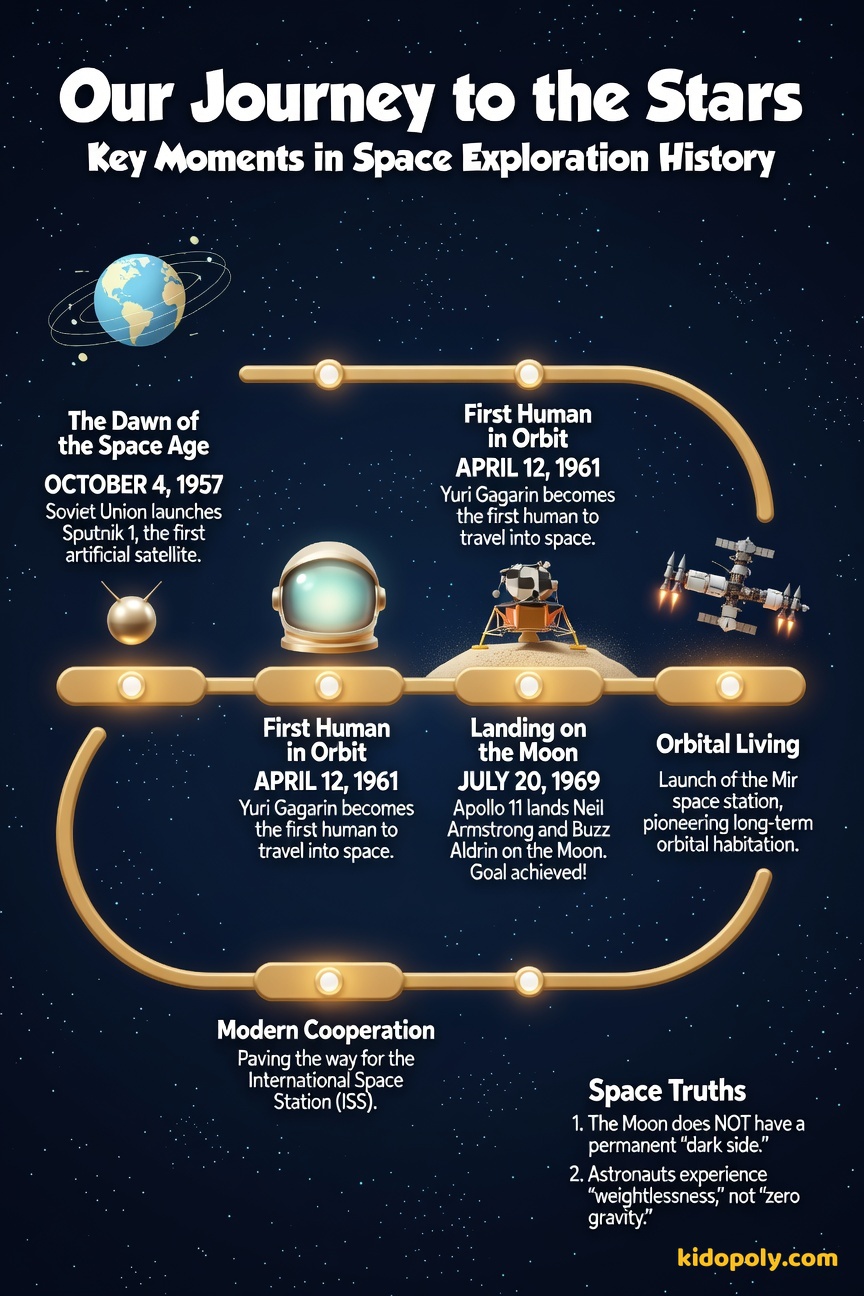
Our Journey to the Stars
Key Moments in Space Exploration History
From the first satellite to living in orbit, history is marked by incredible leaps forward. Each mission builds on the last, pushing the boundaries of what we thought was possible.
Space exploration has a rich history, starting with early rocketry theory and significant milestones like Sputnik 1 in 1957 and the Moon landing in 1969. Key figures range from theoretical pioneers like Tsiolkovsky to pioneering astronauts like Yuri Gagarin and Neil Armstrong. Modern exploration balances human missions with robotic probes, all while continually debunking common space myths, such as the idea of a 'dark side' of the Moon or 'zero gravity.'
Key Moments in Space Exploration History
From the first satellite to living in orbit, history is marked by incredible leaps forward. Each mission builds on the last, pushing the boundaries of what we thought was possible.
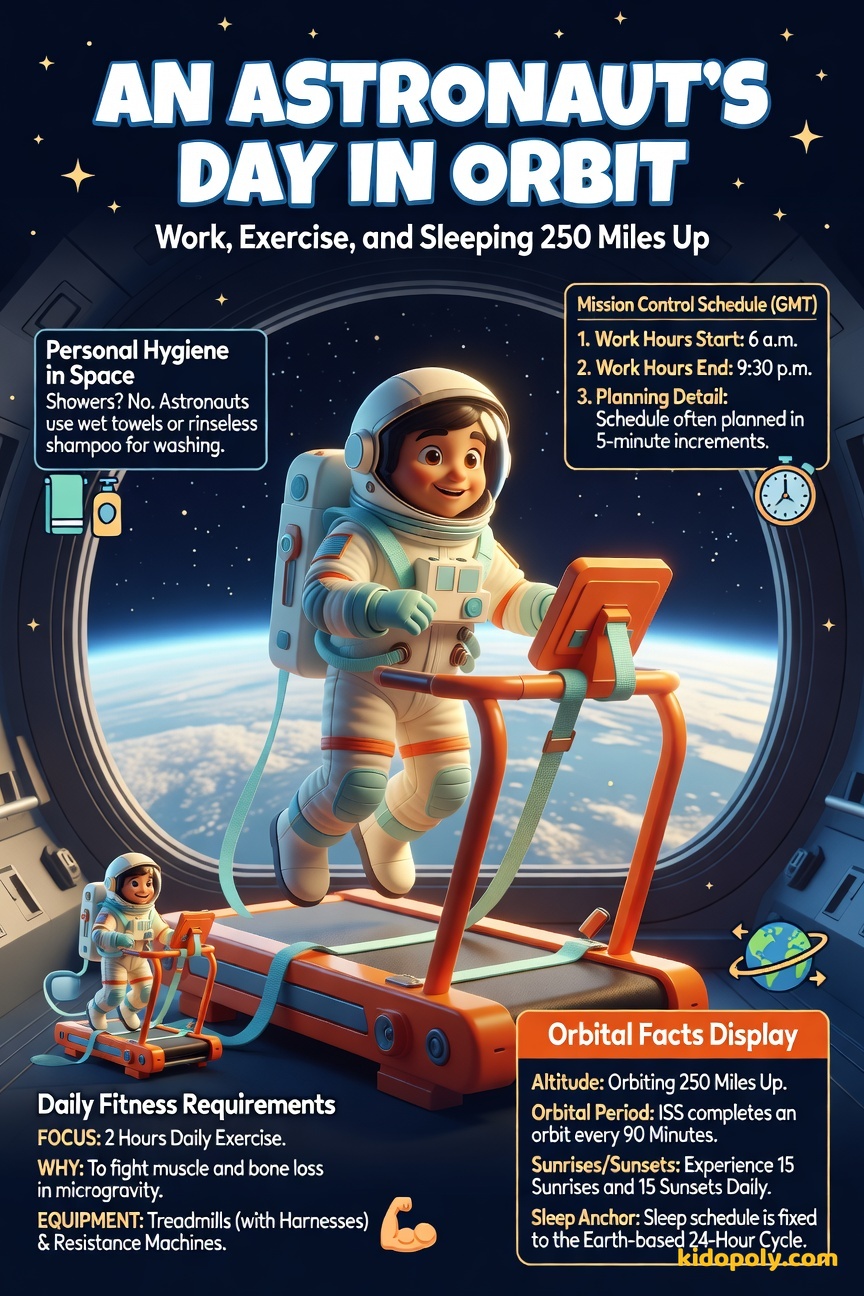
Work, Exercise, and Sleeping 250 Miles Up
Astronauts live and work in a very structured way aboard the ISS to stay healthy and productive. Even simple tasks like brushing their teeth look completely different without gravity!
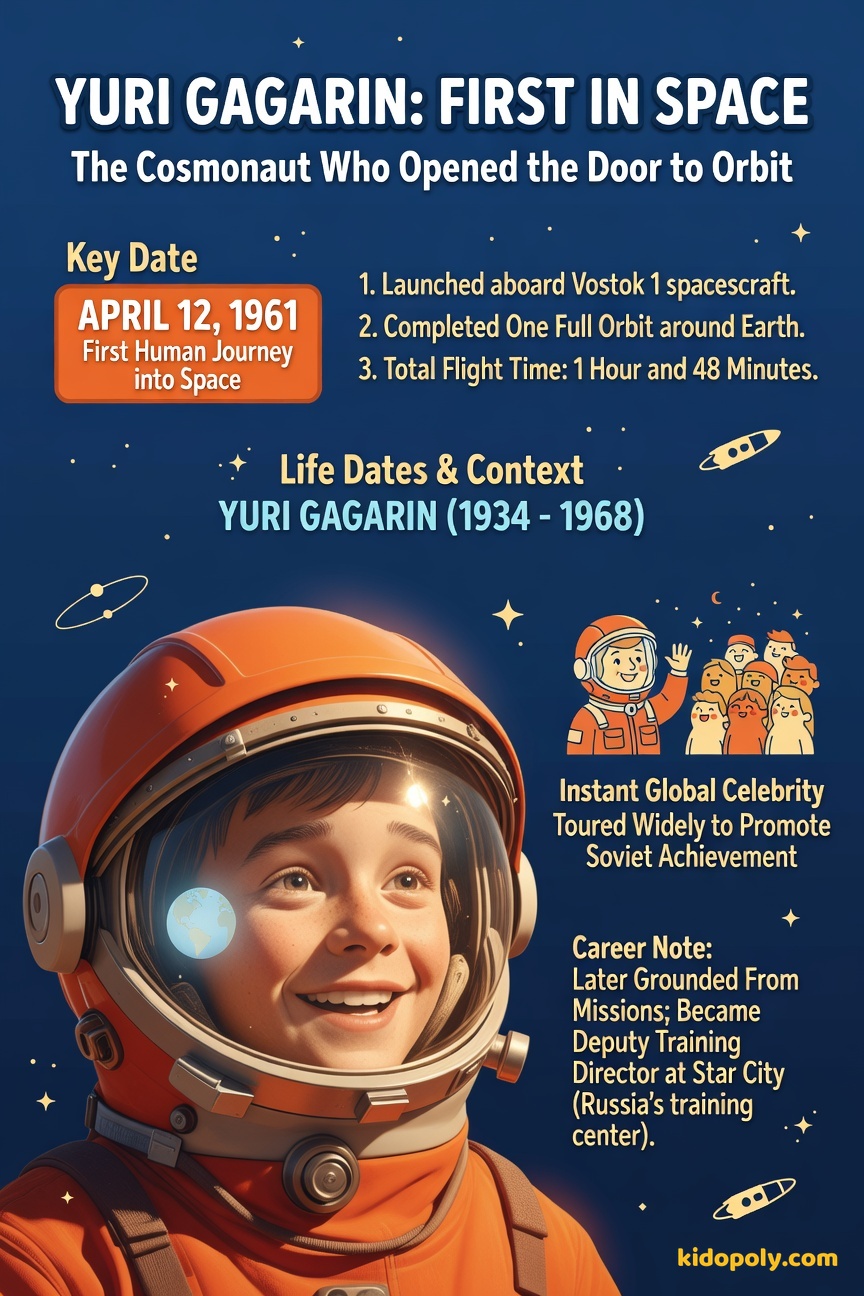
The Cosmonaut Who Opened the Door to Orbit
Yuri Gagarin's historic flight proved that humans could survive the journey into space and orbit our planet. His courage made him a worldwide hero and a pioneer for all future space travelers.
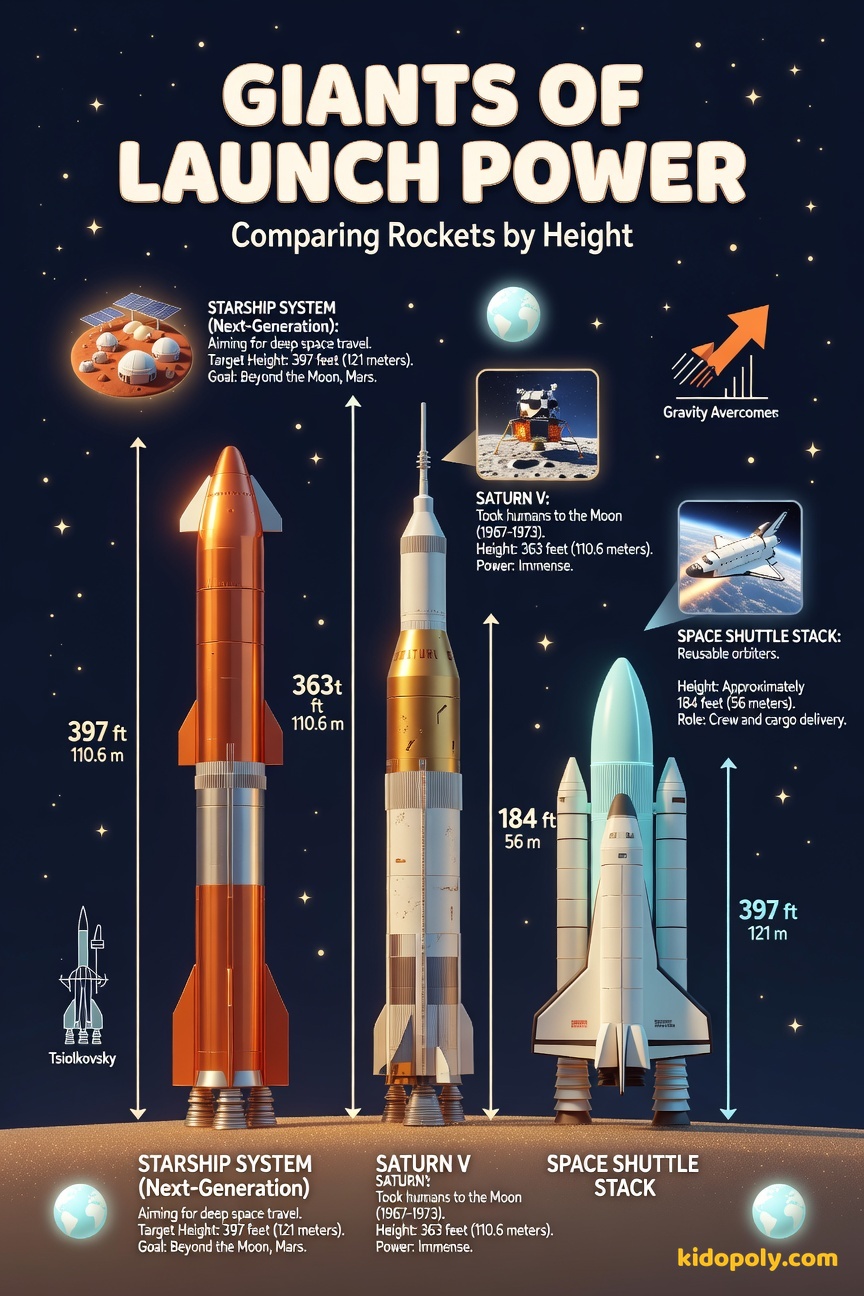
Comparing Rockets by Height
To leave Earth, you need incredible power! Comparing the Saturn V to modern rockets shows how engineering is constantly evolving to build vehicles powerful enough for deeper space missions.
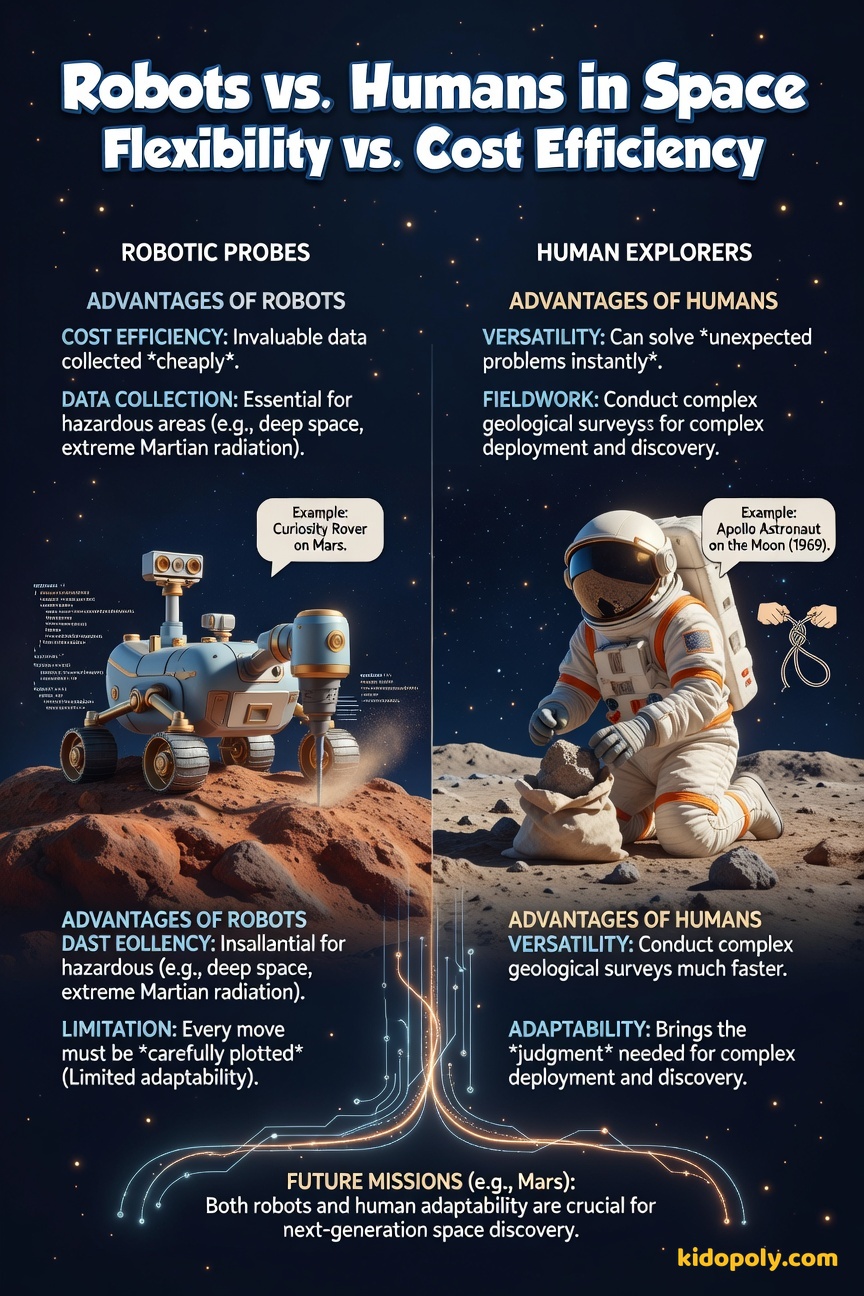
Flexibility vs. Cost Efficiency
Robots are amazing remote scientists, capable of exploring places too dangerous for people. But for hands-on research and creative problem-solving, nothing beats a human astronaut with a plan B!
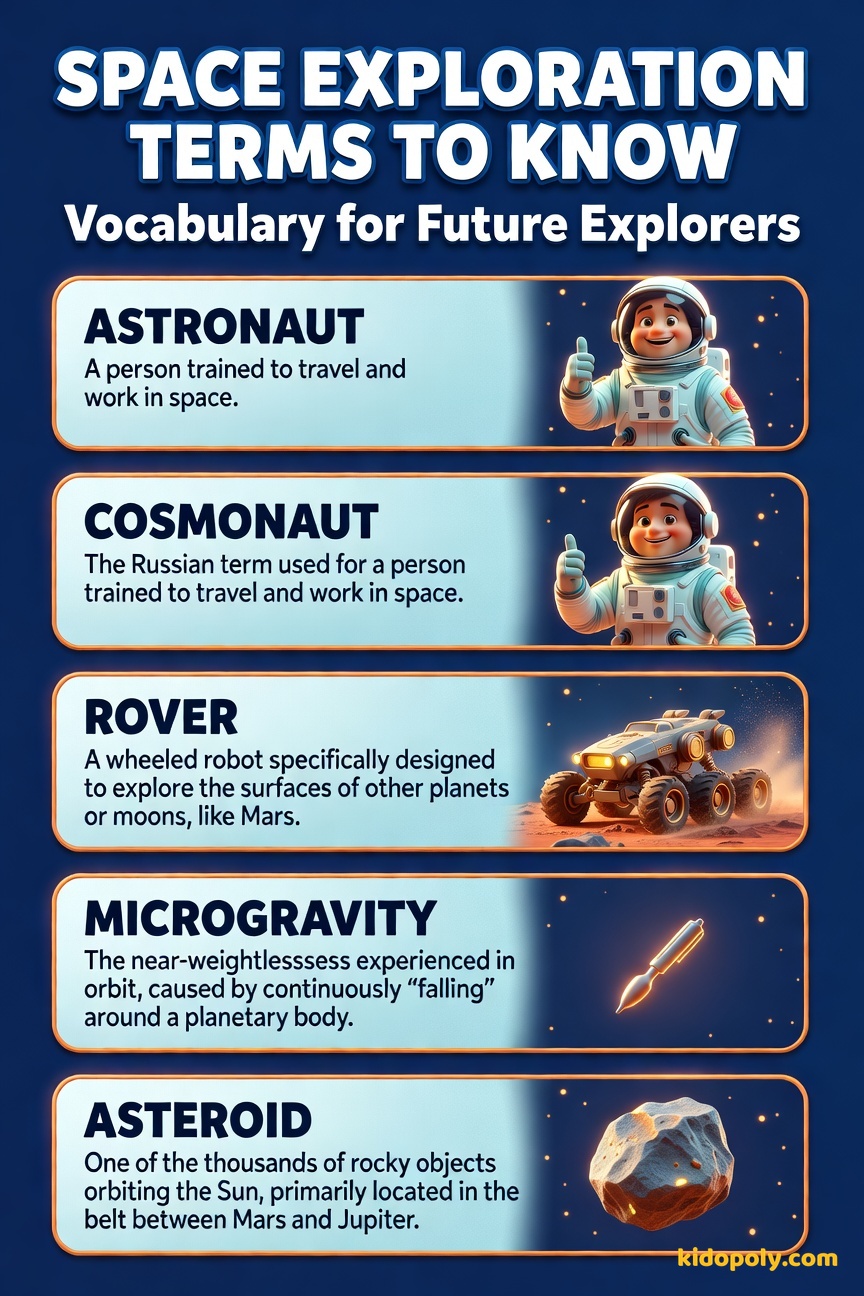
Vocabulary for Future Explorers
Learn the language of space! Knowing these key terms helps you understand the incredible missions and concepts that shape our exploration of the cosmos.
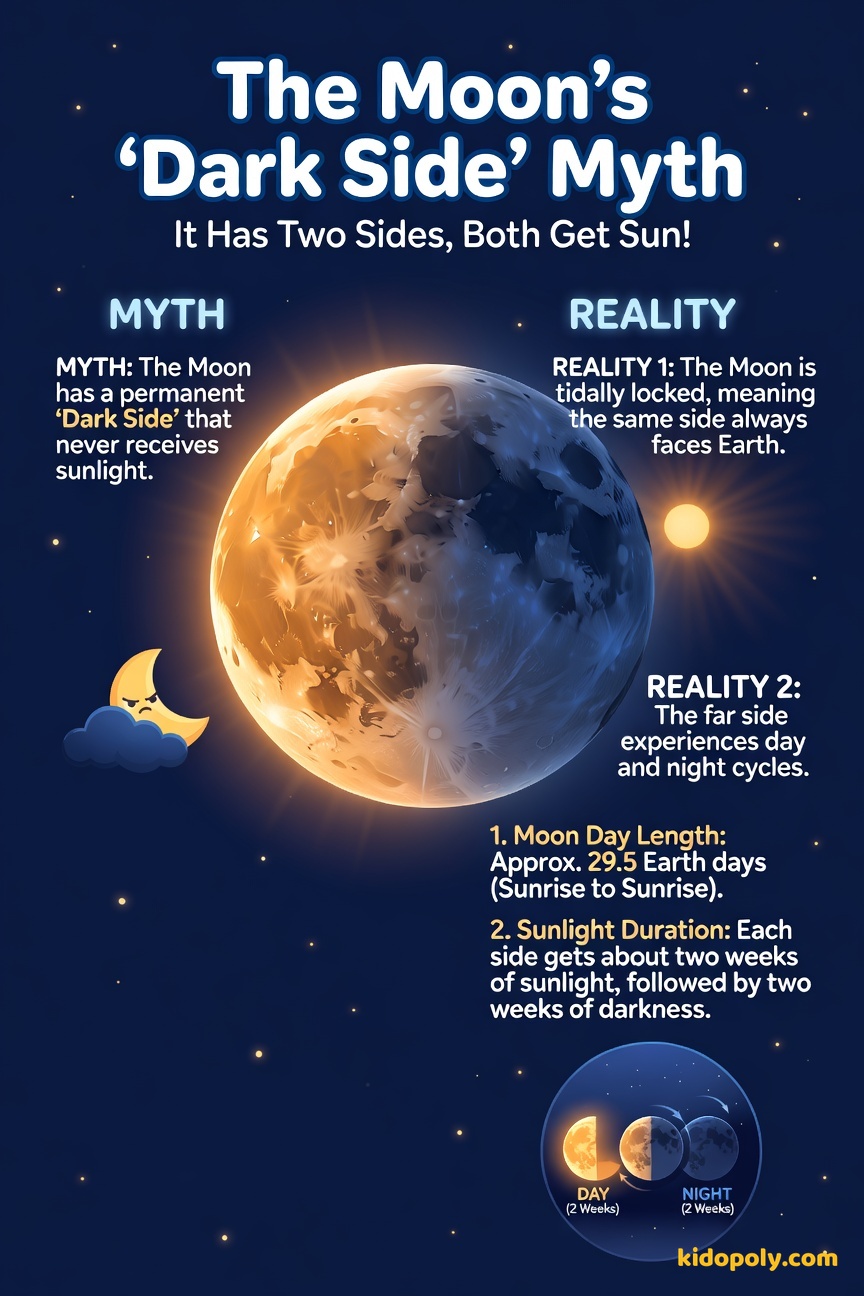
It Has Two Sides, Both Get Sun!
It's easy to think the side we never see is always dark, but that's just a myth! The Moon rotates slowly, giving every part of it a turn in the Sun's light.
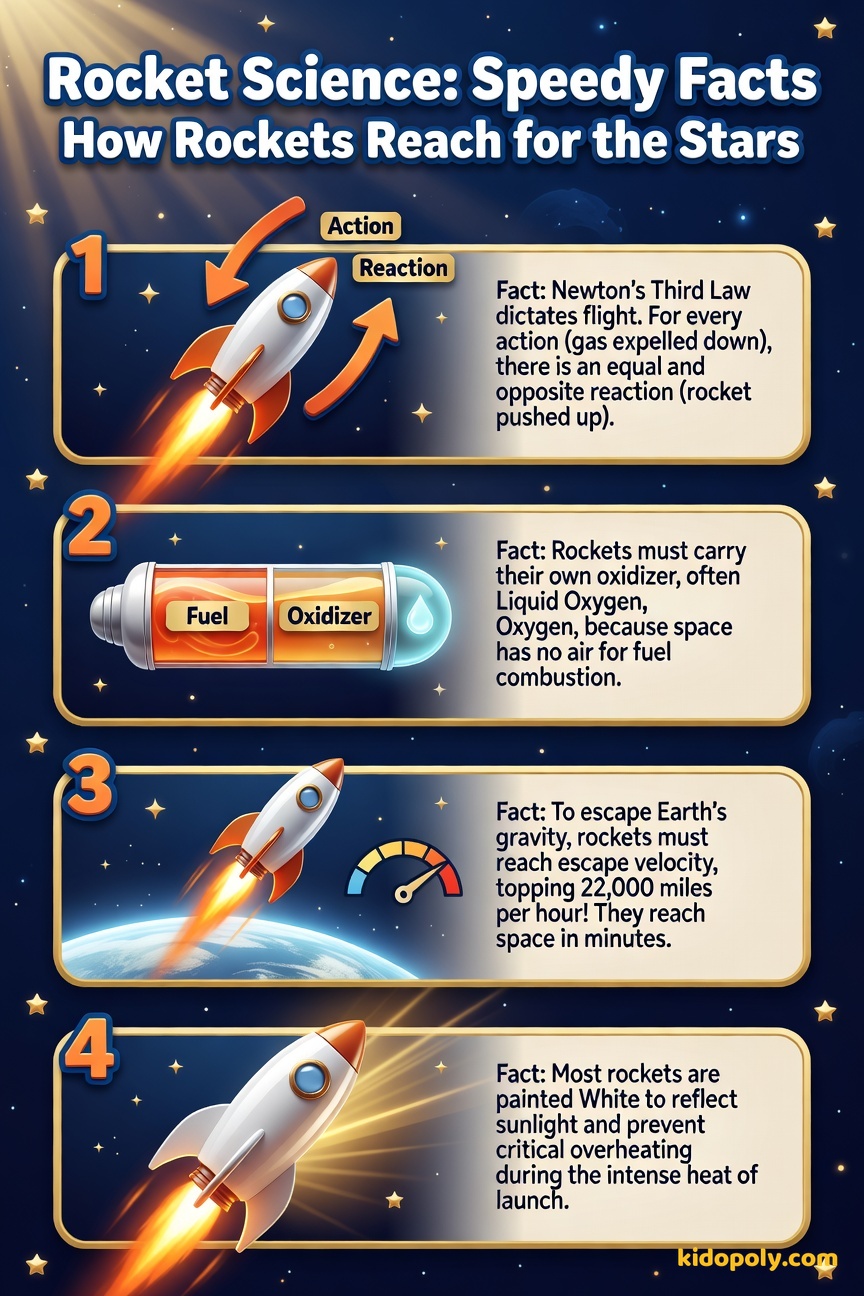
How Rockets Reach for the Stars
Rockets are an incredible example of physics in action! They harness powerful laws of motion and chemistry to launch us off our home planet.
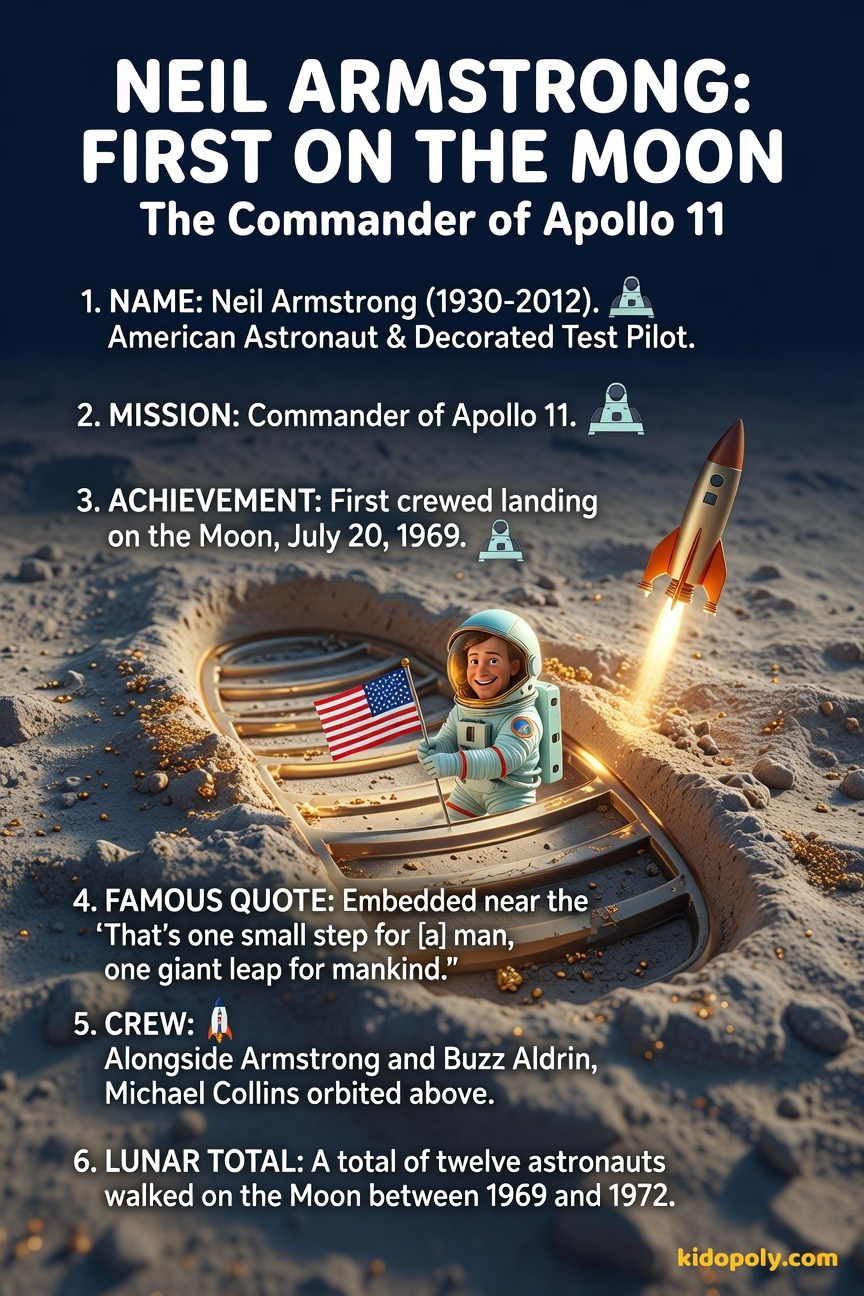
The Commander of Apollo 11
Neil Armstrong's famous first step inspired millions around the world and marked the high point of the 20th-century space race. His engineering background was key to the mission's success.
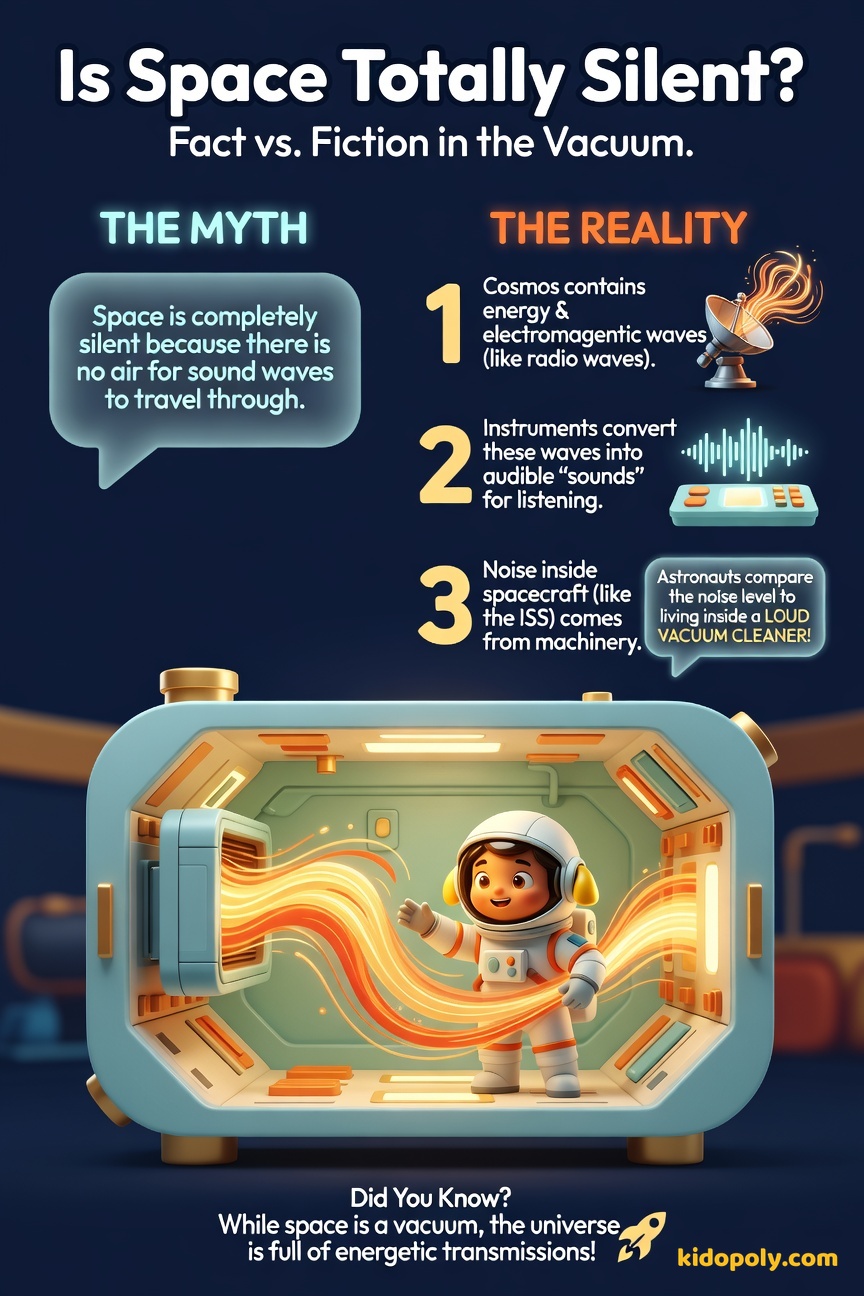
Fact vs. Fiction in the Vacuum
Space may be a vacuum, but it's not truly quiet! While explosions are silent, scientists can turn cosmic radio signals into music, and astronauts on the ISS live with constant machine noise.
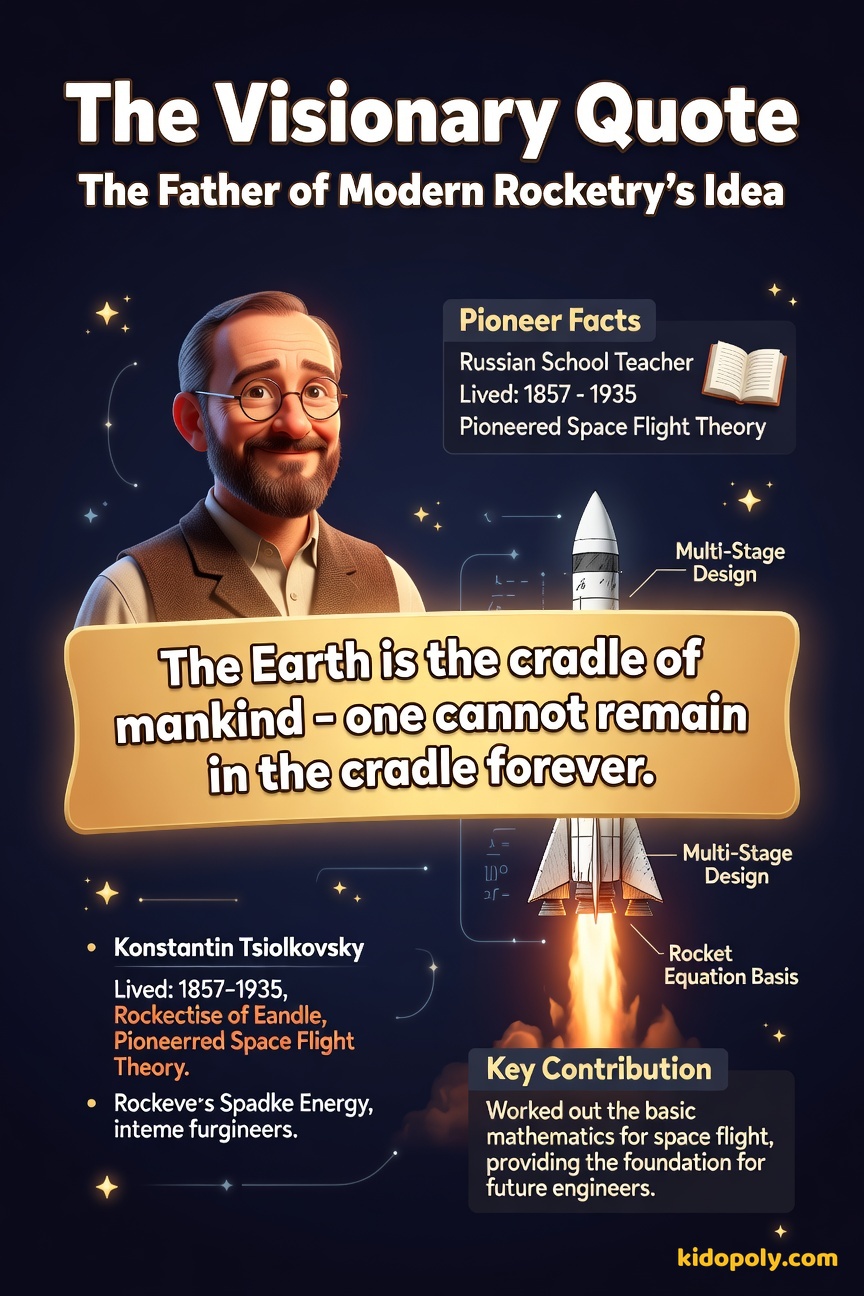
The Father of Modern Rocketry's Idea
This quote captures the driving spirit behind all space exploration: the need to see what lies beyond our home. Tsiolkovsky provided the essential math for that dream to become reality.