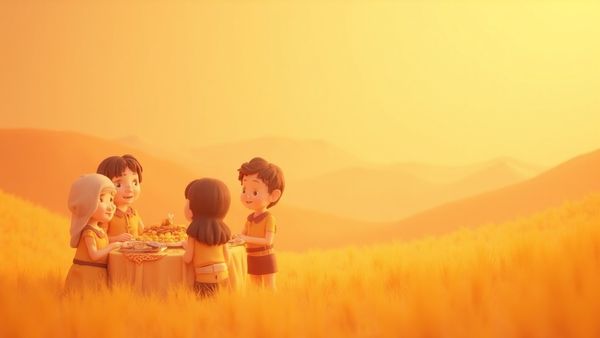
The first Thanksgiving was a harvest celebration held in the autumn of 1621 between the English Pilgrims and the Wampanoag Native Americans. Nearly 140 people celebrated together after the Pilgrims survived their first harsh winter. It’s a key moment showing early interactions in American history.
Have you ever wondered what Thanksgiving was REALLY like when it first started, way back in the 1600s?
It’s one of the most famous stories in American history: brave Pilgrims sailing across the ocean and meeting the helpful Native Americans! The Pilgrims were a group of English families who sailed on a ship called the Mayflower in 1620 because they wanted to worship God in their own way. When they arrived in what they called Plymouth Colony, the first winter was incredibly tough—about half of the 102 passengers sadly passed away. They learned so much from the local people that helped them survive! This story is a super important part of American History for kids to learn about.

Mira says:
"Wow, the Pilgrims were so brave to cross the huge ocean! But the Wampanoag people were even braver to welcome strangers and share their home. That's what real teamwork looks like!"
What Are Pilgrims and Native Americans?
The Pilgrims you read about were actually called Separatists. They wanted to separate completely from the Church of England, which made life hard for them in England. They sailed to North America seeking religious freedom.
The Wampanoag were the Native American people who had been living in the area—the land we now call Massachusetts—for thousands of years before the Pilgrims arrived! Their name, Wampanoag, means “people of the first light” because they lived where the sun first rises on the coast.
Mind-Blowing Fact!
The Wampanoag people had seen other Europeans before the Pilgrims, but when the Pilgrims arrived with women and children, the Wampanoag didn't see them as an immediate threat.
How Many People Shared the First Harvest Feast?
The famous feast happened in the autumn of 1621 to celebrate a successful harvest after that terrible first winter. It wasn't called 'Thanksgiving' back then; it was just a harvest celebration!
The number of guests who showed up was surprising! There were about 50 English colonists, but the Wampanoag chief, Massasoit, arrived with about 90 of his men! That means there were nearly 140 people in total celebrating together!
Led by Chief Massasoit
Autumn Harvest
The celebration lasted
Who sailed on the Mayflower
How Did Squanto Help the Pilgrims Survive?
The Pilgrims struggled badly in that first year because they didn't know how to live in the new land. That’s where a Wampanoag man named Tisquantum, better known as Squanto, stepped in.
Squanto was special because he had actually learned English! He had been kidnapped and sold into slavery in Europe before finding his way back to America. He became a crucial friend and teacher.
Squanto's Survival Lessons for the Pilgrims
Squanto taught the colonists essential skills they needed to make it through the next year.
He showed them how to fish in the local rivers and how to plant native crops like corn.
He also taught them how to hunt for nuts and berries in the forests around Plymouth.
💡 Did You Know?
The Wampanoag were dealing with a terrible sickness that had wiped out entire villages before the Pilgrims arrived, which is one reason why they made a peace pact with the colonists for safety against rivals like the Narragansett.
🎯 Quick Quiz!
Which of these foods was ALMOST CERTAINLY NOT on the menu at the First Thanksgiving in 1621?
Why Is the First Thanksgiving Story Complicated Today?
While the feast was a time of sharing and survival, it's important to know that the peace between the Pilgrims and Wampanoag did not last forever. As more English settlers arrived, land was taken, and tensions grew.
Many Native Americans today see Thanksgiving not just as a happy harvest story, but as a National Day of Mourning to remember the struggles, loss of land, and impact of colonization that followed.
- What they ATE: Venison (deer brought by the Wampanoag), wildfowl (like turkey and ducks), fish, lobster, clams, corn (ground into meal or porridge), beans, and squash.
- What they DIDN'T eat: Stuffing, mashed potatoes, cranberry sauce (no sugar!), or pumpkin pie.
- How they ATE: For three days, people likely ate with their hands, sitting on benches, boxes, or even tree stumps—not at a formal table with plates!
- What they WORE: Not the black and white clothes with big buckles you see in drawings! Pilgrims wore greens, browns, and beiges most days.
The first gathering in 1621 was a unique moment where two very different groups shared food and celebrated survival together. It’s a story that reminds us how important it is to learn new skills from others, even when times are incredibly hard, and to remember all sides of history!
Questions Kids Ask About American History
Keep Exploring the Past!
The story of the Pilgrims and the Wampanoag shows us that history is full of amazing, complicated moments. Next time you celebrate a fall feast, remember the skills that were shared to make that first harvest possible! What other early American stories should we dig up next?