The Ancient Olympic Games began in 776 BCE at Olympia, Greece, as a religious festival honoring Zeus. Starting with just one foot race, the festival grew to five days of athletic competition including wrestling, chariot racing, and the brutal Pankration. Athletes competed naked for a simple olive wreath crown. The games ran for nearly 1,200 years before being banned in 393 AD, and were revived as the modern Olympics in 1896.
Did you know that the amazing sporting celebrations we call the Olympics started thousands of years ago in Ancient Greece?
Get ready to travel back in time to a place called Olympia to explore the Ancient Olympic Games! These incredible sports festivals were first held way back in 776 BCE and happened every four years for almost 1,200 years! They weren't just about winning; they were a giant religious celebration to honor the most powerful Greek god, Zeus, the king of the gods. Even warring city-states would pause their fighting to attend! In this guide, you'll discover the history of the ancient games, meet the legendary Greek athletes who competed, explore the sacred site of Olympia where it all happened, and learn about events so tough they make today's sports look easy. Ready, set, GO!

Mira says:
"Wow! Can you believe they stopped wars just for a sports festival? It shows how much they valued fair competition and honoring their gods. Imagine the excitement when everyone gathered in Olympia!"
What Were the Ancient Olympics REALLY Like?
The first ancient Olympics started small -- really small! Back in 776 BCE, the very first event was just one foot race called the stadion, which was about the length of the stadium track, or around 200 meters. The winner of that first race was a cook named Koroibos from the nearby city of Elis. For the first few games, that was it! No swimming, no basketball, just running!
Over time, though, the festival grew from just one day to about five days long! More awesome events were added, like wrestling, javelin throwing, discus throwing, and super-exciting chariot races. It was a massive party with athletes, spectators, and merchants all gathering in the sacred place called Olympia.
Mind-Blowing Fact!
The very first event at the 776 BCE Olympics was a footrace called the stadion, which was about 200 meters long -- that's the origin of our modern word 'stadium'!
Amazing Rules and Records of the Ancient Games
The rules for competing were very strict! You couldn't just show up. To compete, you had to be a freeborn Greek man -- no slaves allowed. Before the games even started, every athlete had to swear an oath to Zeus that they had been training hard for at least ten months!
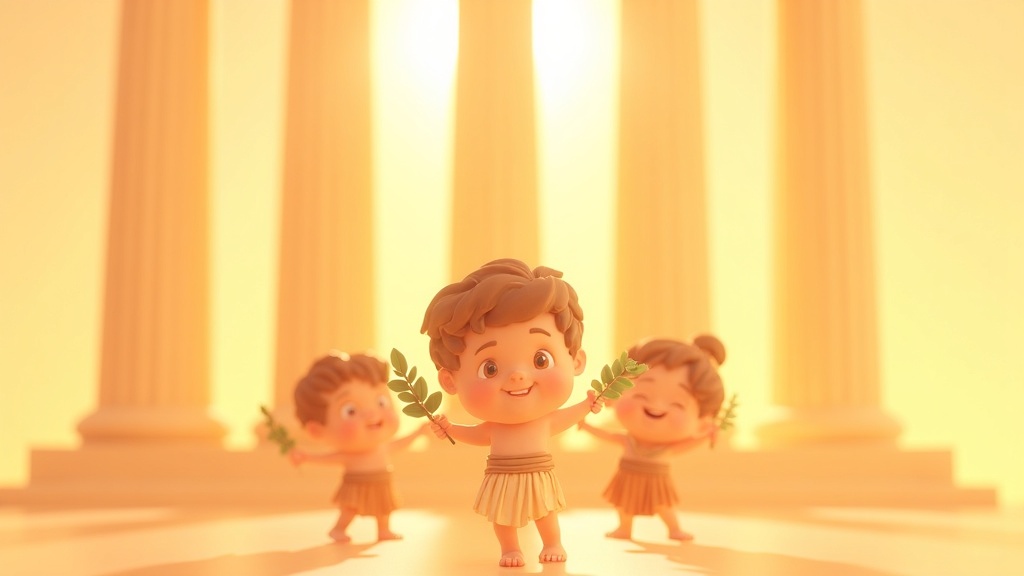
Unlike today where we give out gold, silver, and bronze medals, the ancient winners only got one prize: a crown made of olive leaves called the kotinos! But getting that simple wreath brought HUGE honor to the athlete and their city-state. They were treated like superstars when they went home! There was no second or third place -- only the winner received glory.
(Almost 2,800 years ago!)
(Grew from just one day!)
People visiting every four years.
(After running for nearly 1,200 years!)
History of the Ancient Games
The Ancient Olympics were much more than just sports; they were a huge religious festival! They took place at a sanctuary site called Olympia, which was the most important place dedicated to worshipping Zeus. Before the games even started, athletes had to take an oath to the god, promising to compete fairly and follow all the rules.
One of the most incredible parts was the Olympic Truce! When the games were announced, a sacred peace was declared across all the Greek city-states. This meant that even if two cities were fighting a war, everyone could travel safely to Olympia to watch or compete. Messengers traveled across all of Greece announcing that all fighting must stop!
How the Events Grew Over Time
The first games only had that one running event, but the program grew dramatically over the centuries. They added the diaulos (two lengths, about 400 meters) and the dolichos (a long-distance race). Then came combat sports and the pentathlon. By the time the games were at their peak, the festival included religious ceremonies, prayers, and a massive sacrifice of 100 oxen to Zeus before the athletic competitions began!
Why Did the Ancient Games End?
The games were incredibly popular and lasted for almost 12 centuries! However, when the Roman Empire adopted Christianity, the old ways of worshipping gods like Zeus were banned. In 393 AD, the Roman Emperor Theodosius I stopped the pagan festivals, which included the Olympics.
But the spirit of the ancient games never truly died! The incredible success and traditions inspired Baron Pierre de Coubertin to start the modern Olympic Games in Athens in 1896. So when you watch the Olympics today, you are watching a tradition that is over 2,800 years in the making!

Famous Greek Athletes
The athletes of the Ancient Olympics weren't just casual weekend sports players -- they trained like professionals! They spent months, sometimes years, preparing in places called gymnasia under the watch of professional trainers. They practiced constantly to perfect their moves, and even followed a four-day training cycle called the tetrad: heavy training one day, rest another, light exercise on the fourth.
In the Ancient Olympics, all the male athletes competed completely naked! They believed it showed off their training and dedication to the gods. They even rubbed oil all over their bodies before wrestling events! After a tough workout, athletes cleaned off with a tool called a strigil (a curved stick) before getting a massage.
Leonidas of Rhodes: The Greatest Champion
The greatest ancient athlete might have been Leonidas of Rhodes. He won the same three running events in four consecutive Olympic Games (164 BCE to 152 BCE), earning him an incredible 12 olive wreaths! That's a record that stood for over 2,000 years until modern swimmer Michael Phelps finally surpassed his total Olympic wins.
Cynisca: The First Female Champion
Even though women weren't allowed to compete or watch the main events (because men competed without clothes!), one clever woman found a way to win! Cynisca, a Spartan princess, entered the chariot races in 396 BCE -- not as a driver, but as the owner of the winning chariot team. Since the owner got the victory crown, Cynisca became the first woman to win at the Olympics, proving women could still be champions!
💡 Did You Know?
The greatest ancient athlete, Leonidas of Rhodes, won 12 olive wreaths across four consecutive Olympic Games. His record stood for over 2,000 years!

Olympia -- Where It All Began
Olympia was not just any town; it was a really important religious sanctuary in Ancient Greece. The whole area was basically a huge sacred place dedicated to worship. The main god they honored was Zeus, the mightiest of all the Greek gods.
Within the sacred area, called the Altis or Sacred Grove, stood the magnificent Temple of Zeus. And inside that temple was one of the most incredible sights of the ancient world: the Statue of Zeus at Olympia -- one of the Seven Wonders of the Ancient World!
Mind-Blowing Fact!
The Statue of Zeus at Olympia was so huge it was about 40 feet (13 meters) tall! That's like stacking five grown-up elephants on top of each other! It was made of ivory and gold.
The Sacred Site
The ancient Olympic Games were always held at Olympia -- they never moved to different cities like our modern Olympics do! Up to 40,000 spectators would make the journey every four years to watch the games and participate in the religious festivals.
It's important to remember that Olympia was the party place, but Mount Olympus (the highest mountain in Greece) was the gods' home. The Twelve Olympian gods were believed to live on top of Mount Olympus, looking down at the games held in their honor at Olympia below!

The Ancient Olympic Events
While the ancient Greeks didn't have swimming or basketball, they had events that tested incredible strength and skill. All events were individual -- there were no team sports!
- Running Races: The stadion (short sprint), the diaulos (two lengths), and the dolichos (long-distance).
- The Pentathlon: The ultimate all-around challenge with five events: long jump (using hand weights called halteres!), javelin throw, discus throw, wrestling, and a foot race!
- Chariot Racing: Dangerous and super popular! The owner of the chariot team -- not the driver -- received the victory crown.
- Combat Sports: Wrestling, boxing (no weight classes, no rounds!), and the wild Pankration -- basically ancient MMA with only two rules: NO biting and NO gouging the eyes!
- Equestrian Events: Only the wealthy could afford horses and chariots for these thrilling competitions.
🎯 Quick Quiz!
What was the *only* prize a winner received at the Ancient Olympic Games?
🎯 Quick Quiz!
What was the main reason the Ancient Olympic Games were held?
Even though the ancient games ended long ago, the spirit of competition and bringing people together lives on in the modern Olympics, which started again in 1896! From a single foot race to a five-day festival honoring the king of the gods, the Ancient Olympics gave us a powerful tradition that celebrates human skill and peace -- a legacy that is definitely not boring for kids today!
Questions Kids Ask About Ancient Greece
Keep Exploring the Ancient World!
From a single foot race to a five-day festival honoring the king of the gods, the Ancient Olympics were a giant part of history! The legendary athletes, the sacred site of Olympia, and the incredible events they competed in set a standard for excellence that still inspires us today. Now you know why athletes still strive for glory in the spirit of ancient Olympia. Keep exploring -- history is full of amazing stories waiting to be discovered!